数据与计算发展前沿 ›› 2026, Vol. 8 ›› Issue (1): 129-147.
CSTR: 32002.14.jfdc.CN10-1649/TP.2026.01.011
doi: 10.11871/jfdc.issn.2096-742X.2026.01.011
蔡毅1( ),王晓宾1,*(),陈蕊丽1,韩珣2,3
收稿日期:2025-03-07
出版日期:2026-02-20
发布日期:2026-02-02
通讯作者:
王晓宾
作者简介:蔡毅,中国人民公安大学,硕士研究生,研究方向为文件检验。基金资助:
CAI Yi1(),WANG Xiaobin1,*(),CHEN Ruili1,HAN Xun2,3
Received:2025-03-07
Online:2026-02-20
Published:2026-02-02
Contact:
WANG Xiaobin
摘要:
【目的】本文旨在系统综述基于笔迹的书写者性别和年龄检测方面的研究现状及未来趋势。【方法】首先概述了主要数据集及应用场景,随后将笔迹识别模型分为传统机器学习和深度学习两类方法。对传统方法,分析了SVM、KNN、决策树等算法特点;对深度学习方法,细分为端到端神经网络和特征提取网络两种模式。通过比较不同算法在相同数据集上的性能,评估了各种方法的优劣。【结果】本文全面总结了基于笔迹书写者的性别与年龄检测技术的研究现状,并对现有模型和方法进行了深入分析。研究发现,深度学习模型在特征提取和分类精度方面具有显著优势;而传统机器学习方法在处理小规模数据集时仍有独特优势。当前研究面临缺乏中文公开数据集、模型可解释性不足及细粒度年龄分类精度低等挑战。未来研究应关注多语言数据集开发、创新视觉模型架构、深化注意力机制应用以及推进多模态特征融合,推动笔迹识别技术在高可靠性场景中的实际应用。
蔡毅,王晓宾,陈蕊丽,韩珣. 基于笔迹的书写者性别与年龄检测研究综述[J]. 数据与计算发展前沿, 2026, 8(1): 129-147.
CAI Yi,WANG Xiaobin,CHEN Ruili,HAN Xun. Review of Research on Gender and Age Detection of Writers Based on Handwriting[J]. Frontiers of Data and Computing, 2026, 8(1): 129-147, https://cstr.cn/32002.14.jfdc.CN10-1649/TP.2026.01.011.
表1
笔迹书写人性别与年龄分类相关数据集"
| 数据集 | 参与者总数 | 样本总数 | 男女比例 | 语言 | 优点 | 缺点 |
|---|---|---|---|---|---|---|
| QUWI[ | 1,017 | 4,068 | ≈1/1 | 阿拉伯语和英语 | 支持文本依赖和非依赖任务; 书写工具多样;规模大、多样性高;公开可用 | 书写内容规范性高,限制了个体差异表达,影响模型泛化能力 |
| MSHD[ | 100 | 1,300 | 43/57 | 阿拉伯语和法语 | 多脚本内容;适用于多种手写分析任务;公开可用 | 规模小,深度学习适用性受限;预定义文本限制书写特征多样性 |
| KHATT[ | 1,000 | 4,000 | 677/323 | 阿拉伯语 | 作者来源广泛;包含多种分辨率图像;公开可用 | 仅限阿拉伯语,不适用于多语言或跨语言研究 |
| IAM[ | 650 | 650 | — | 英语 | 大规模语料库;数据多样性;包含预处理和分割程序;公开可用 | 仅限英语,缺乏多语种数据 |
| HHD[ | 702 | 702 | 351/351 | 希伯来语 | 多种书写风格;字符、单词、文本行层面完整标注;公开可用 | 手动验证缓慢;字符分类实验仍有改进空间 |
| FSHS[ | 2,200 | 2,700 | — | 阿拉伯语 | 规模大,手写风格丰富;适用性广 | 数据清理工作量大;语言单一;不公开 |
| RDF[ | 11,118 | 11,118 | — | 汉语 | 文本类型丰富;适合多特征研究 | 特征值复杂,数据处理难度大;数据隐私性高,不公开 |
| CEHS[ | 221 | 1,531 | — | 英语和汉语 | 覆盖中英文,年龄范围广;数据增强技术提升模型效果 | 样本量较小;老年组分类准确率低;中英文适用性差异;不公开 |
| HEBIU[ | 405 | 810 | — | 希伯来语和英语 | 语言多样,样本数量适中;支持多语言笔迹研究 | 数据标准化要求高;不公开 |
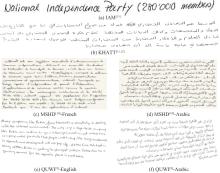
图1
来自不同数据集的样本"
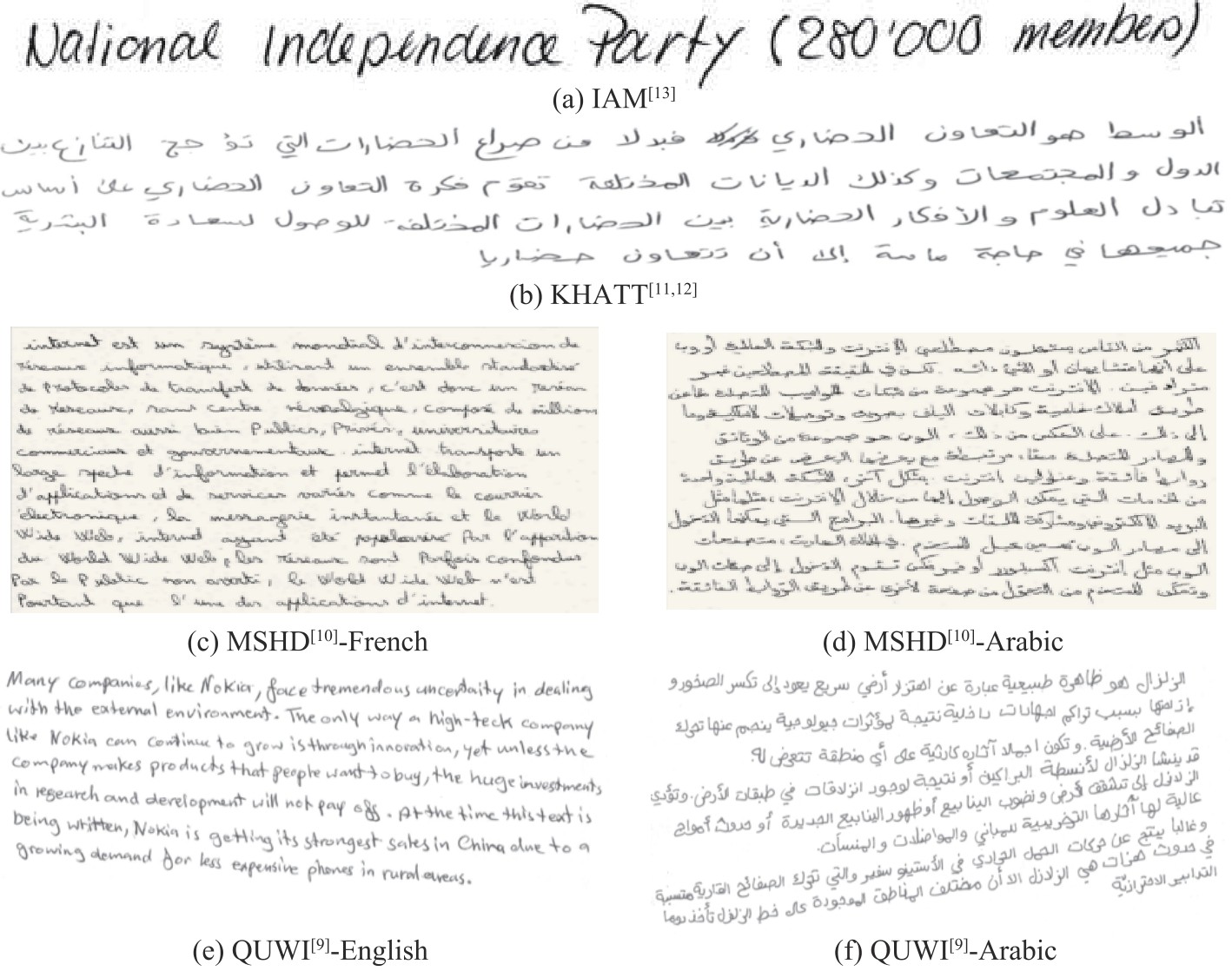
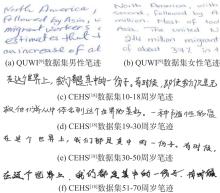
图2
不同性别和不同年龄的笔迹样本"
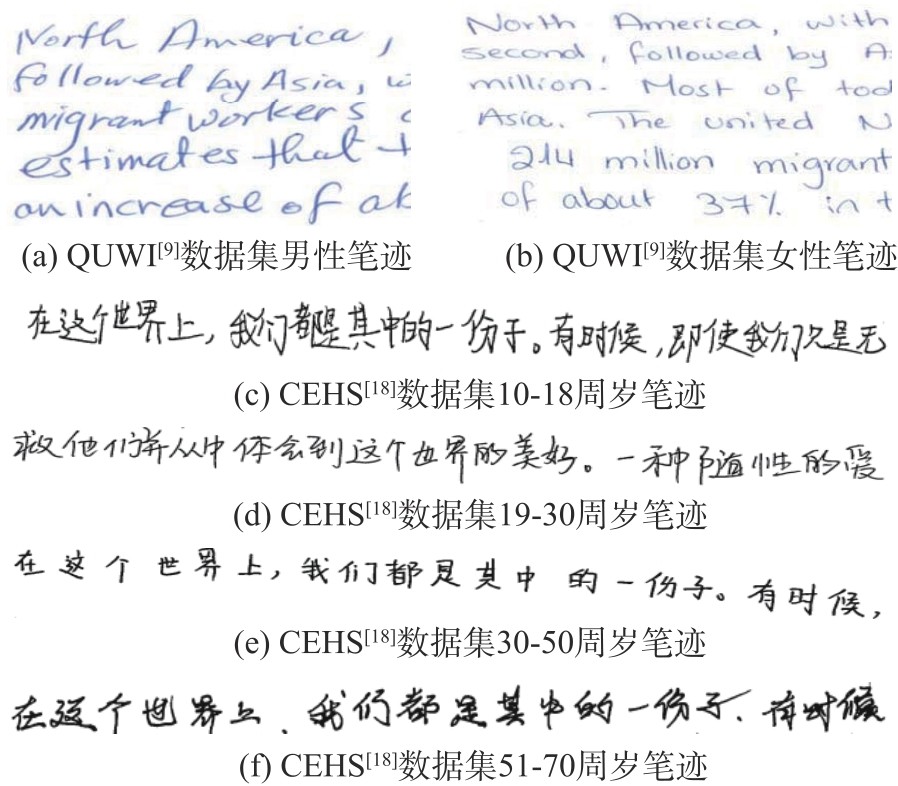
表2
使用SVM的笔迹检测方法"
| 检测内容 | 数据集 | 特征提取(方法) | 方法概述及优势 | 不足 |
|---|---|---|---|---|
| 性别、利手性和年龄 | IAM | 梯度局部二值模式(GLBP) | 提出多类预测方案,结合模糊隶属度模型改进年龄特征描述,多类预测准确率达61.51%[ | 年龄特征难以区分,预测准确率受限 |
| 性别 | IAM、QUWI、KHATT、MSHD | 基于模板直方图(HOTs)、旋转不变均匀局部二值模式(LBPriu)、GLBP | 基于模糊积分(FI)算子组合SVM预测器,HOTs特征描述笔画局部方向,与其他特征互补[ | 未分析不同特征在语言和书写者中的表现差异 |
| 性别、利手性和年龄 | IAM、KHATT | 拓扑特征和GLBP | 通过Sugeno模糊积分结合多种SVM分类器,显著提升性别、惯用手和年龄范围的预测准确性[ | 特征提取对参数敏感,模型需优化以适应不同语言和数据集 |
| 性别 | IAM | 方向梯度直方图(HOG)、局部二值模式(LBP) | 使用局部描述符(如HOG、LBP和像素密度)显著提高性别分类精度[ | 分类性能对特征选择和数据集大小敏感,计算复杂度较高 |
| 性别、利手性和年龄 | IAM、KHATT | 灰度共生矩阵(GLCM)、GLBP、HOG和像素分布 | 基于Sugeno模糊积分的组合方法,整合多特征SVM分类器,显著提升预测精度[ | 计算复杂度高,模型泛化能力需加强,特征选择和参数调整需经验 |
| 性别、利手性和年龄 | IAM,KHATT | GLBP、HOG | 提出基于梯度的特征(HOG和GLBP),在多语言数据集上表现出 语言无关性,显著提升分类精度[ | GLBP在复杂任务中不优于HOG,年龄预测表现较差 |
| 性别 | QUWI | 基于方向的基本图像特征(oBIFs) | 利用oBIFs特征实现多脚本手写图像的性别分类,对不同语言脚本具有鲁棒性[ | 计算复杂度高,特征提取繁琐,参数调整敏感 |
| 性别 | QUWI | LBP、HOG、GLCM和尺度不变特征变换(SFTA) | 集成分类器(如Bagging、Voting和Stacking)结合多种纹理特征,在多语言环境中表现优异[ | 对特征选择和分类器组合参数调优敏感,低质量数据集效果需改进 |
| 性别 | 自建数据集 | LBP、HOG | 融合多种特征(LBP、HOG、统计和纹理特征),使用多种机器学习分类器实现较高性别分类准确率[ | 计算复杂度高,对特征选择和数据集大小敏感,泛化性能受限 |
| 性别 | QUWI | CNN作为特征提取器 | 利用预训练CNN提取特征,在多脚本手写文本中实现较高性别分类准确率,验证了不同观察尺度的有效性[ | 分类结果对脚本依赖性较强,跨语言性能下降 |
| 性别 | 自建数据集 | Zoning、Diagonal、Transition和PeakExtent方法 | 结合PCA进行特征降维,显著提高性别分类准确性和处理效率[ | 对数据多样性和特征选择依赖高,泛化能力受限 |
| 性别 | ICDAR2013RDF | 方向、曲率、链码、梯度方向、纹理和字形特征 | 基于互信息(MI)选择最佳特征子集,结合核函数优化特征选择过程,提升分类精度[ | 计算复杂度高,核方法时间复杂度显著增加 |
| 性别 | ICDAR2013、RDF | 纹理特征、几何特征和滤波(Gabor)特征 | 基于核互信息(KMI)的特征选择方法,减少冗余特征,显著提高分类准确率[ | 计算复杂度高,对特征选择参数敏感,需额外优化资源 |
| 性别 | ICDAR2013 | 文本行不规则性(TLI)、笔压不规则性(PPI)、笔迹密度(SI)和白色和黑色像素的百分比(PWB) | 提取物理和视觉特征,结合多分类器(SVM、逻辑回归和KNN)及多数投票提高预测准确性[ | 对特征选择依赖高,少样本场景性能下降 |
| 性别 | QUWI、MSHD | 基于小波变换的全局纹理特征 | 使用小波变换和符号动态过滤提取性别相关纹理特征,在跨语言脚本和数据集上表现优异[ | 对文本内容依赖高,跨数据库性能下降 |
| 性别 | QUWI、MSHD | 局部和全局特征(倾斜度/方向、圆润度/曲率、整洁度/清晰度和书写纹理) | 结合支持向量机和神经网络,利用多种特征(如斜度、曲率、纹理等)实现较高分类精度[ | 对数据集脚本和内容依赖强,跨数据库性能下降 |
| 性别 | QUWI | 线路分布云,铰链功能 | 引入链码特征线路分布(COLD)和铰链特征,结合SVM分类器,在多语言数据集上取得较高准确率[ | 对参数设置敏感,跨领域适应性不稳定 |
| 性别 | QUWI、MSHD | GLCM、GLBP、HOG和基于分割的分形纹理分析 | 使用空间金字塔匹配方法结合局部和全局特征,在语言相关场景中表现优异[ | 跨语言分类效果不稳定,对数据集特征提取依赖高 |
| 性别 | IAM | 曲线变换提取特征 | 基于单类支持向量机(OC-SVM)方法,利用曲线变换进行特征提取,在数据稀少情况下表现良好[ | 对参数调优敏感,模型复杂度高 |
图3
性别分类工作流程"
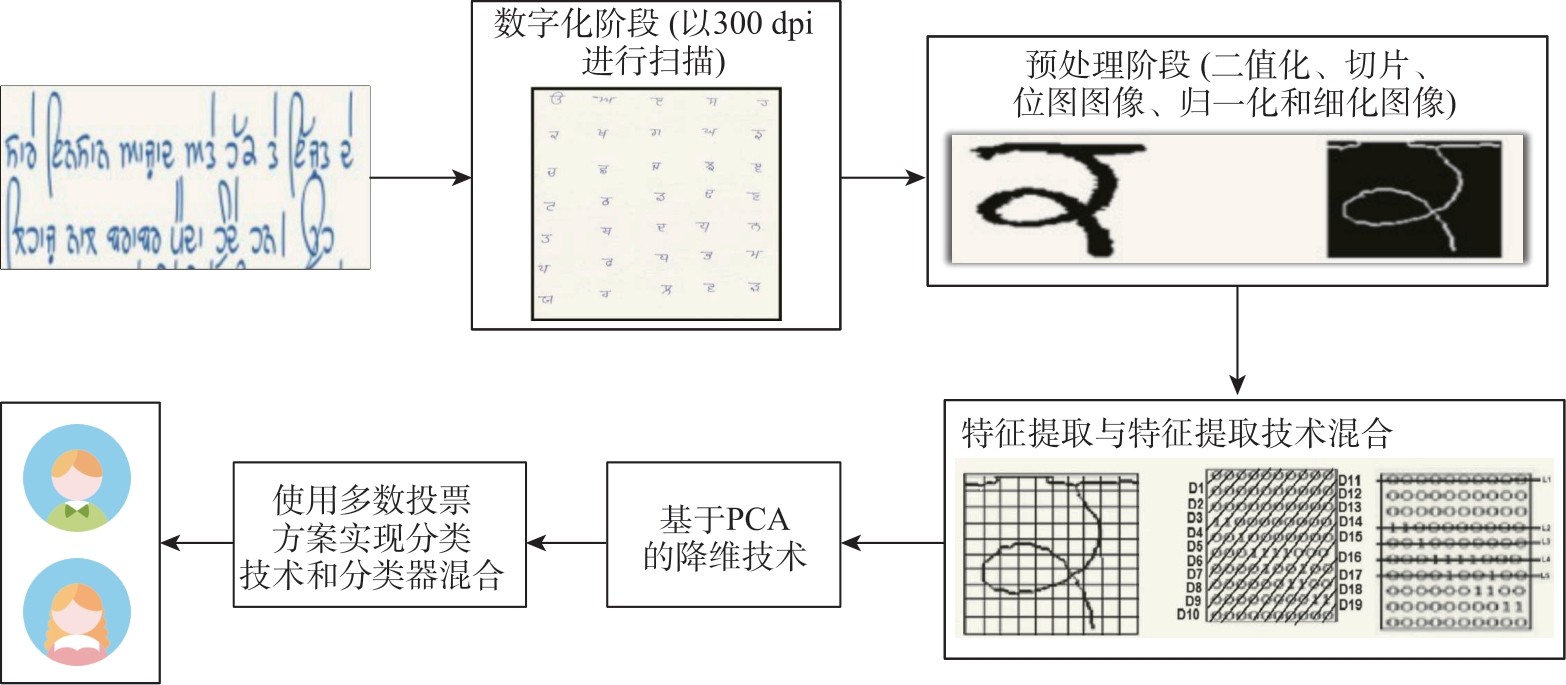
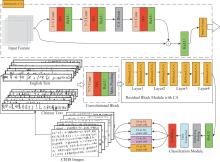
图4
CA-ResNet[18]模型架构"
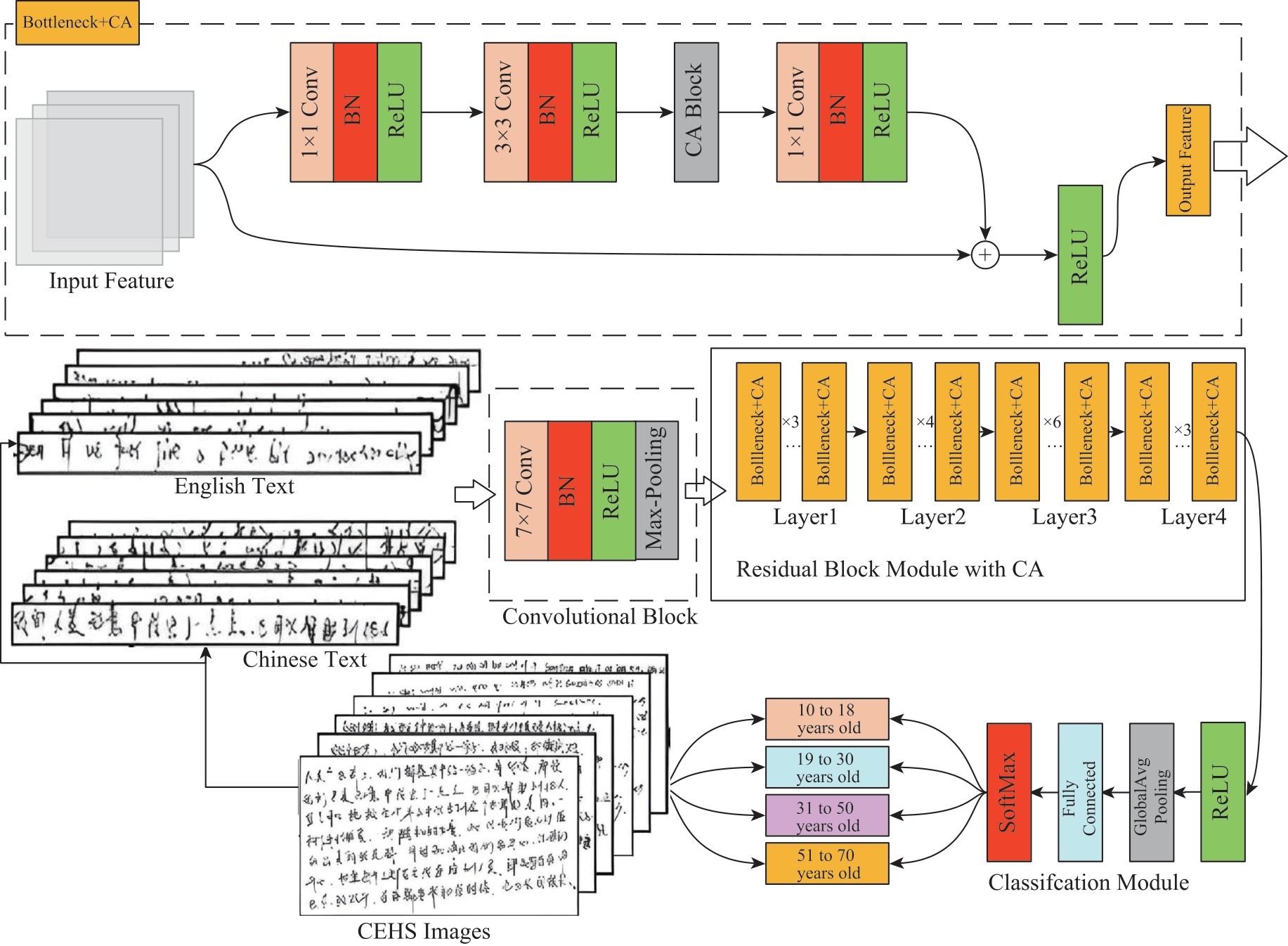
表3
基于端到端深度学习的笔迹检测方法"
| 检测内容 | 作者 | 数据集 | 训练网络 | 方法概述及优势 | 不足 |
|---|---|---|---|---|---|
| 性别和利手性 | Morera2018[ | IAM、KHATT | CNN | 通过CNN自动提取特征,实现性别和惯用手性的高效预测,在多语言数据集上表现良好,简化了模型设计 | 对数据量和样本多样性依赖较高,处理连笔或低质量文本时性能下降 |
| 性别和利手性 | Rahmanian2021[ | KHATT、IAM | InceptionV3、 DenseNet201、Xception | 使用先进CNN(如DenseNet201、InceptionV3和Xception)实现高精度性别和惯用手性分类 | 对样本多样性和数量依赖较高,手写风格重叠时分类准确性下降 |
| 性别 | Rabaev2021[ | HHD、QUWI | VGGNet、ResNet、Inception、Xception、DenseNet、NASNet、EfficientNet | 结合迁移学习,对多语言笔迹数据集进行性别分类,分类精度高于以往研究 | 对数据量需求大,跨语言分类时表现波动,通用性受限 |
| 性别、年龄 | Balat2024[ | KHATT、AHAWP、MSHD | ResNet50、MobileNetV2、EfficientNetB7 | 通过深度学习和迁移学习,使用先进模型(如ResNet50、MobileNetV2和EfficientNetB7)进行阿拉伯笔迹识别,分类准确率高,引入数据增强技术提高泛化能力 | 对预处理和数据增强技术依赖高,需大规模高质量数据集,实际应用中可扩展性和适用性受限 |
| 性别 | Xue2020[ | ICDAR 2013、KHATT、IAM | ATP-DenseNet | 提出基于注意力机制的两路径DenseNet模型(ATP-DenseNet),结合页面级和单词级特征,提高性别分类精度,在多个数据集上表现良好 | 对手写图像切分质量敏感,高连笔性文本中切分不当可能导致分类精度下降 |
| 性别、年龄 | Rabaev2022[ | KHATT、QUWI、HHD | B-ResNet | 提出双线性ResNet网络,对多语言笔迹数据集进行性别和年龄分类,表现优于现有方法 | 对样本量需求高,高龄组(50岁以上)分类表现不理想,数据量较少导致模型难以有效学习 |
| 年龄 | Zhao2024[ | CEHS、IAM | CA-ResNet | 引入坐标注意力机制增强深度残差网络(CA-ResNet),显著提升年龄识别精度和效率,在多语言数据集上表现优异 | 对数据量需求高,部分年龄组(特别是老年组)分类准确率较低 |
图5
ATP-DenseNet[56]架构"
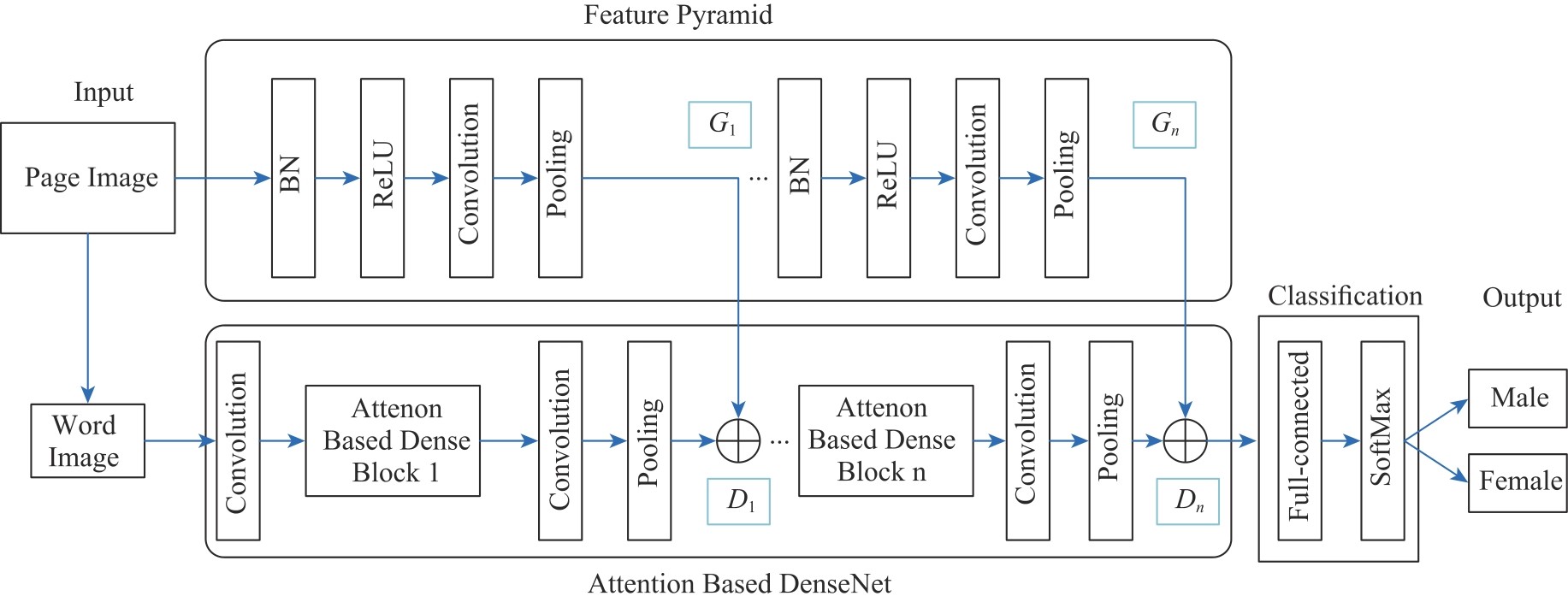
表4
笔迹检测方法比对"
| 方法类别 | 代表方法 | 主要特点 | 适用数据集 | 优势 | 局限性 | 实际应用效果 |
|---|---|---|---|---|---|---|
| 传统机器学习 | SVM、 KNN、朴素 贝叶斯等 | 依赖于手动设计和提取特征;对小数据集的适应性强 | 数据量较小、特征单一的数据集 | 对数据量要求较低 | 无法自动学习复杂特征,其性能高度依赖于选取的特征是否能够充分代表数据的模式;对跨数据集泛化能力较弱 | 适用于特征稳定、数据无大量噪声的数据集 |
| 端到端的深度学习 | CNN | 自动提取复杂特征 | 数据量充足、复杂场景数据 | 适应复杂的书写风格 | 数据需求大,资源消耗高;容易出现过拟合问题 | 适合在复杂数据集和应用场景中使用 |
表5
在QUWI数据集的分类性能"
| 准确率(%) | ||||||||
|---|---|---|---|---|---|---|---|---|
| 训练集(上)测试集(下) | ||||||||
| 文献 | 数据集设置 | 特征/特征提取方法 | 分类器 | Ar | En | Ar | En | Ar+En |
| Ar | En | En | Ar | Ar+En | ||||
| [ | TR=300,VL=100,TS=100 | LBP,HOG,GLCM | 集成 | — | — | — | — | 85.0 |
| [ | TR=2800,TS=1200 | AlexNet | LDA | 69.83 | 71.50 | 64.83 | 65.16 | 70.08 |
| [ | TR=282,TS=193 | 基于小波变换的全局纹理特征 | SVM | 77.70 | 75.50 | 69.40 | 68.60 | — |
| ANN | 71.90 | 69.00 | 67.80 | 68.70 | — | |||
| [ | TR=1200,TS=400 | 倾斜,曲率,整齐度,分形特征,纹理特征 | SVM | 68.50 | 68.50 | 62.50 | 67.00 | 68.75 |
| ANN | 66.50 | 65.00 | 65.00 | 65.00 | 67.50 | |||
| [ | TR=500,VL=250,TS=250 | COLD和Hinge特征 | SVM | 74.8 | 73.6 | 64.00 | 64.80 | — |
| [ | TR=300,VL=100,TS=100 | SIFT描述符 | SVM | 74.00 | 76.00 | 73.00 | 70.00 | — |
| 集成 | 82.00 | 81.00 | 68.00 | 64.00 | — | |||
| [ | S=4068,TR=70%,TS=30% | 几何特征 | RF | 71.1 | 71.6 | — | — | 69.8 |
| KDA | 68.4 | 69.7 | — | — | 72.3 | |||
| [ | TR=300,VL=100,TS=100 | Gabor滤波器、傅立叶变换 | NN | 70.0 | 67.0 | 63.0 | 69.0 | — |
表6
在ICDAR2013、ICDAR2015、ICFHR2016竞赛的分类性能"
| 准确率(%) | ||||||||
|---|---|---|---|---|---|---|---|---|
| 训练集(上)测试集(下) | ||||||||
| 文献 | 特征/特征提取方法 | 分类器 | Ar | En | Ar | En | Ar+En | |
| Ar | En | En | Ar | Ar+En | ||||
| [ | ICDAR2013 | 基于小波变换的全局纹理特征 | SVM | 77.7 | 75.5 | — | — | 77.8 |
| ANN | 71.9 | 69 | — | — | 79.3 | |||
| [ | ICDAR2013 | 基于方向的基本图像特征(oBIF) | 集成分类器 | 76.17 | 77.98 | — | — | 75 |
| [ | ICDAR2013 | 方向、曲率、链码、梯度方向、纹理和字形特征 | SVM | — | — | — | — | 63.6 |
| [ | ICDAR2013 | 纹理特征、几何特征和Gabor特征 | SVM | — | — | — | — | 67.2 |
| [ | ICDAR2013 | 形态特征 | SVM、LR、KNN集成 | — | — | — | — | 65.71 |
| [ | ICDAR2013 | 像素特征 | Efficient-Net | 74 | 75 | — | — | 67 |
| [ | ICDAR2013 | 像素特征 | ATP-DenseNet-169 | — | — | — | — | 71.8 |
| [ | ICDAR2015 | 纹理特征和形态特征 | SVM | 68.5 | 68.5 | 62.5 | 67 | — |
| ANN | 65 | 66.5 | 63 | 65 | — | |||
| [ | ICDAR2015 | 纹理特征 | ANN | 70 | 67 | 69 | 63 | — |
| [ | ICDAR2015 | LBP,HOG,GLCM,SFTA | 集成分类器 | 79 | 85 | 80 | 81 | — |
| [ | ICDAR2015 | 像素特征 | CNN | 76 | 77 | 71 | 73 | — |
| [ | ICDAR2015 | 基于方向的基本图像特征(oBIF) | 集成分类器 | 64 | 75 | 66 | 55 | — |
| [ | ICDAR2015 | 纹理和局部特征 | SVM | 74 | 76 | 73 | 70 | — |
| AdaBoost | 82 | 81 | 68 | 64 | — | |||
| [ | ICFHR2016 | 基于方向的基本图像特征(oBIF) | SVM | 74.8 | 75.2 | 66 | 70 | — |
| [ | ICFHR2016 | HOTs、LBPriu、GLBP | SVM,FI | 73.86 | 70.39 | 67.96 | 64.37 | — |
| [ | ICFHR2016 | 纹理特征 | SVM | 86.5 | — | — | — | — |
表7
在MSHD数据集上的分类性能"
| 准确率(%) | ||||||||
|---|---|---|---|---|---|---|---|---|
| 训练集(上)测试集(下) | ||||||||
| 文献 | 数据集设置 | 特征/特征提取方法 | 分类器 | Ar | Fr | Ar | Fr | Ar+Fr |
| Ar | Fr | Fr | Ar | Ar+Fr | ||||
| [ | TR=252,TS=252 | HOTs、LBPriu、GLBP | SVM,FI | 88.09 | 88.09 | 80.95 | 80.95 | — |
| [ | TR=252,TS=252 | 基于小波变换的全局纹理特征 | SVM | 75.80 | 77.60 | 77.90 | 75.70 | 79.90 |
| ANN | 76.40 | 75.10 | 74.20 | 75.20 | 79.00 | |||
| [ | TR=252,TS=252 | 倾斜,曲率,整齐度,分形特征,纹理特征 | SVM | 76.98 | 70.63 | 57.94 | 70.63 | 73.02 |
| ANN | 73.41 | 69.44 | 61.90 | 69.84 | 69.44 | |||
| [ | TR=950,TS=950 | SIFT描述符 | SVM | 85.00 | 83.00 | 69.00 | 68.00 | — |
| 集成 | 90.00 | 87.00 | 62.00 | 66.00 | — | |||
表8
在IAM数据集上的分类性能"
| 文献 | 数据集设置 | 特征/特征提取方法 | 分类器 | 准确率(%) |
|---|---|---|---|---|
| [ | TR=200,VL=50,TS=100 | LBP,HOG | SVM | 70.00 |
| TS=50 | 74.00 | |||
| [ | TR=80,VL=20,TS=50 | HOG,,GLBP | SVM | 70.00 |
| [ | TR=100,TS=50 | 曲线变换 | OC-SVM | 77.33 |
| [ | TR=8,462,TS=2,464 | 形状和曲率特征 | CNN | 80.72 |
| [ | S=330 | InceptionV3,DenseNet201,Xception | CNN | 77.60 |
| [ | TR=2,573,TS=1,286 | ATP-DenseNet-169 | CNN | 77.60 |
表9
在KHATT数据集上的性别分类性能"
| 文献 | 数据集设置 | 特征/特征提取方法 | 分类器 | 准确率(%) |
|---|---|---|---|---|
| [ | W=135 | GLCM、GLBP、HOG和像素分布 | SVM,模糊MIN-MAX规则 | 82.22 |
| [ | W=135 | HOG,GLBP | SVM | 74.44 |
| [ | W=135 | HOTs、LBPriu、GLBP | SVM,FI | 82.22 |
| [ | W=1,000,S=2,000 | 形状和曲率特征 | CNN | 68.90 |
| [ | W=135,S=270 | InceptionV3,DenseNet201,Xception | CNN | 75.00 |
| [ | W=1,000,S=2,000 | ATP-DenseNet-169 | CNN | 74.10 |
| [ | W=1,000,S=2,000 | B-ResNet | B-CNN | 76.14 |
表10
各数据集上年龄检测性能"
| 文献 | 数据集 | 数据集设置 | 特征/特征提取方法 | 分类器 | 准确率(%) |
|---|---|---|---|---|---|
| [ | IAM | S=1,700, C=2 | CA-ResNet | CA-ResNet | 79.6 |
| [ | KHATT | S=270, C=2 | GLCM、GLBP、HOG | SVM | 81.11 |
| [ | IAM | S=330, C=2 | HOG, GLBP | SVM | 70 |
| KHATT | S=405, C=3 | 55 | |||
| [ | QUWI | S=4,068, C=7 | 几何特征 | KDA,RF | 55 |
| [ | KHATT | S=2,000, C=2 | B-ResNet | B-ResNet | 78.17 |
| C=3 | 67.3 | ||||
| C=4 | 66.65 | ||||
| [ | KHATT | S=405, C=2 | GoogleNet, ResNet | SVM | 65.2 |
| C=2 | ANN | 67 | |||
| FSHS | S=2,000, C=2 | SVM | 71 | ||
| C=2 | ANN | 63.5 | |||
| [ | 自建数据集 | S=400, C=3 | 断续特征 | K-means | 66.25 |
| IAM | S=168, C=2 | 63.6 | |||
| KHATT | S=838, C=2 | 64.44 | |||
| [ | FSHS | S=2,000, C= 2 | ResNet, GoogleNet | SVM | 69.7 |
| [1] | KRIZHEVSKY A, SUTSKEVER I, HINTON G E. ImageNet classification with deep convolutional neural networks[J]. Advances in Neural Information Processing Systems, 2012, 25: 1097-1105. |
| [2] | 韩丹岩, 涂丽云. 文件检验学[M]. 北京: 中国人民公安大学出版社, 2021:19. |
| [3] | HUBER R A, HEADRICK A M. Handwriting identification[M]. Boca RatonFL, USA: CRC Press, 1999. |
| [4] |
GOODENOUGH F L. Sex differences in judging the sex of handwriting[J]. The Journal of Social Psychology, 1945, 22(1): 61-68.
doi: 10.1080/00224545.1945.9714182 |
| [5] |
HAMID S, LOEWENTHAL K M. Inferring gender from handwriting in Urdu and English[J]. The Journal of Social Psychology, 1996, 136(6): 778-782.
doi: 10.1080/00224545.1996.9712254 |
| [6] | UPADHYAY S, SINGH J, SHUKLA S K. Determination of sex through handwriting characteristics[J]. International Journal of Current Research and Review, 2017, 9(13): 11-18. |
| [7] |
VLACHOS F, BONOTI F. Explaining age and sex differences in children’s handwriting: A neurobiological approach[J]. European Journal of Developmental Psychology, 2006, 3(2): 113-123.
doi: 10.1080/17405620500371455 |
| [8] | MARZINOTTO G, ROSALES J C, EL-YACOUBI M A, et al. Age-related evolution patterns in online handwriting[J]. Computational and Mathematical Methods in Medicine, 2016, 2016: 1-15. |
| [9] | MAADEED S A, AYOUBY W, HASSAINE A, et al. QUWI: an arabic and english handwriting dataset for offline writer identification[C]// 2012 International Conference on Frontiers in Handwriting Recognition. Bari, Italy: IEEE, 2012: 746-751. |
| [10] | DJEDDI C, GATTAL A, SOUICI-MESLATI L, et al. LAMIS-MSHD: a multi-script offline handwriting database[C]// 2014 14th International Conference on Frontiers in Handwriting Recognition. Hersonissos, Greece: IEEE, 2014: 93-97. |
| [11] | MAHMOUD S A, AHMAD I, ALSHAYEB M, et al. KHATT: arabic offline handwritten text database[C]// 2012 International Conference on Frontiers in Handwriting Recognition. Bari, Italy: IEEE, 2012: 449-454. |
| [12] |
MAHMOUD S A, AHMAD I, AL-KHATIB W G, et al. KHATT: an open arabic offline handwritten text database[J]. Pattern Recognition, 2014, 47(3): 1096-1112.
doi: 10.1016/j.patcog.2013.08.009 |
| [13] |
MARTI U V, BUNKE H. The IAM-database: an English sentence database for offline handwriting recognition[J]. International Journal on Document Analysis and Recognition, 2002, 5(1): 39-46.
doi: 10.1007/s100320200071 |
| [14] | RABAEV I, KURAR B B, CHURKIN A, et al. The HHD dataset[C]// 2020 17th International Conference on Frontiers in Handwriting Recognition (ICFHR). Dortmund, Germany: IEEE, 2020: 228-233. |
| [15] | AL-QAWASMEH N, SUEN C Y. Gender detection from handwritten documents using concept of transfer-learning[M]// LUY, VINCENTN, YUENP C, et al. Pattern Recognition and Artificial Intelligence, ICPRAI 2020:Vol. 12068. Zhongshan, China: Springer International Publishing, 2020: 3-13. |
| [16] | TAN J, BI N, SUEN C Y, et al. Multi-feature selection of handwriting for gender identification using mutual information[C]// 2016 15th International Conference on Frontiers in Handwriting Recognition (ICFHR). Shenzhen, China: IEEE, 2016: 578-583. |
| [17] |
BI N, SUEN C Y, NOBILE N, et al. A multi-feature selection approach for gender identification of handwriting based on kernel mutual information[J]. Pattern Recognition Letters, 2019, 121: 123-132.
doi: 10.1016/j.patrec.2018.05.005 |
| [18] | ZHAO L, WU X, CHEN X. Enhancing age estimation from handwriting: A deep learning approach with attention mechanisms[J]. International Journal of Advanced Computer Science and Applications, 2024, 15(5): 738-747. |
| [19] | ILLOUZ E, (OMID) DAVID E, NETANYAHU N S. Handwriting-based gender classification using end-to-end deep neural networks[C]// KŮRKOVÁ V, MANOLOPOULOSY, HAMMERB, et al. Artificial Neural Networks and Machine Learning - ICANN 2018. Rhodes, Greece: Springer International Publishing, 2018: 613-621. |
| [20] |
CORTES C, VAPNIK V. Support-vector networks[J]. Machine Learning, 1995, 20(3): 273-297.
doi: 10.1023/A:1022627411411 |
| [21] | BOUADJENEK N, NEMMOUR H, CHIBANI Y. Towards the prediction of multiple soft-biometric characteristics from handwriting analysis[C]// AMINE A, MOUHOUBM, AITMOHAMED O, et al. Computational Intelligence and Its Applications- 6th IFIP TC 5 International Conference, CIIA 2018:Vol. 522. Oran, Algeria: Springer International Publishing, 2018: 211-219. |
| [22] |
BOUADJENEK N, NEMMOUR H, CHIBANI Y. Fuzzy integrals for combining multiple SVM and histogram features for writer’s gender prediction[J]. IET Biometrics, 2017, 6(6): 429-437.
doi: 10.1049/bme2.v6.6 |
| [23] | BOUADJENEK N, NEMMOUR H, CHIBANI Y. Fuzzy integral for combining SVM-based handwritten soft-biometrics prediction[C]//2016 12th IAPR Workshop on Document Analysis Systems (DAS). Santorini, Greece: IEEE, 2016: 311-316. |
| [24] | BOUADJENEK N, NEMMOUR H, CHIBANI Y. Local descriptors to improve off-line handwriting-based gender prediction[C]//2014 6th International Conference of Soft Computing and Pattern Recognition (SoCPaR). Tunis, Tunisia: IEEE, 2014: 43-47. |
| [25] |
BOUADJENEK N, NEMMOUR H, CHIBANI Y. Robust soft-biometrics prediction from off-line handwriting analysis[J]. Applied Soft Computing, 2016, 46: 980-990.
doi: 10.1016/j.asoc.2015.10.021 |
| [26] | BOUADJENEK N, NEMMOUR H, CHIBANI Y. Age, gender and handedness prediction from handwriting using gradient features[C]// 2015 13th International Conference on Document Analysis and Recognition (ICDAR). Tunis, Tunisia: IEEE, 2015: 1116-1120. |
| [27] |
GATTAL A, DJEDDI C, SIDDIQI I, et al. Gender classification from offline multi-script handwriting images using oriented Basic Image Features (oBIFs)[J]. Expert Systems with Applications, 2018, 99: 155-167.
doi: 10.1016/j.eswa.2018.01.038 |
| [28] |
AHMED M, RASOOL A G, AFZAL H, et al. Improving handwriting based gender classification using ensemble classifiers[J]. Expert Systems with Applications, 2017, 85: 158-168.
doi: 10.1016/j.eswa.2017.05.033 |
| [29] | GORNALE S S, KUMAR S, PATIL A, et al. Behavioral biometric data analysis for gender classification using feature fusion and machine learning[J]. Frontiers in Robotics and AI, 2021, 8: Article No.685966. |
| [30] | MOETESUM M, SIDDIQI I, DJEDDI C, et al. Data driven feature extraction for gender classification using multi-script handwritten texts[C]// 2018 16th International Conference on Frontiers in Handwriting Recognition (ICFHR). Niagara Falls, NY, USA: IEEE, 2018: 564-569. |
| [31] |
DARGAN S, KUMAR M, TUTEJA S. PCA-based gender classification system using hybridization of features and classification techniques[J]. Soft Computing, 2021, 25(24): 15281-15295.
doi: 10.1007/s00500-021-06118-0 |
| [32] |
MAKEN P, GUPTA A. A method for automatic classification of gender based on text- independent handwriting[J]. Multimedia Tools and Applications, 2021, 80(16): 24573-24602.
doi: 10.1007/s11042-021-10837-9 |
| [33] |
AKBARI Y, NOURI K, SADRI J, et al. Wavelet-based gender detection on off-line handwritten documents using probabilistic finite state automata[J]. Image and Vision Computing, 2017, 59: 17-30.
doi: 10.1016/j.imavis.2016.11.017 |
| [34] |
SIDDIQI I, DJEDDI C, RAZA A, et al. Automatic analysis of handwriting for gender classification[J]. Pattern Analysis and Applications, 2015, 18(4): 887-899.
doi: 10.1007/s10044-014-0371-0 |
| [35] | GATTAL A, DJEDDI C, BENSEFIA A, et al. Handwriting based gender classification using COLD and hinge features[C]// EL MOATAZ A, MAMMASSD, MANSOURIA, et al. Image and Signal Processing- 9th International Conference, ICISP 2020:Vol. 12119. Marrakesh, Morocco: Springer International Publishing, 2020: 233-242. |
| [36] | ALAEI F, ALAEI A. Gender detection based on spatial pyramid matching[C]// LLADÓS J, LOPRESTI D, UCHIDA S. Document Analysis and Recognition - 16th International Conference, ICDAR 2021:Vol. 12824. Lausanne, Switzerland: Springer International Publishing, 2021: 305-317. |
| [37] | GUERBAI Y, CHIBANI Y, HADJADJI B. Handwriting gender recognition system based on the one-class support vector machines[C]// 2017 Seventh International Conference on Image Processing Theory, Tools and Applications (IPTA). Montreal, QC, Canada: IEEE, 2017: 1-5. |
| [38] |
MCCULLOCH W S, PITTS W. A logical calculus of the ideas immanent in nervous activity[J]. The Bulletin of Mathematical Biophysics, 1943, 5(4): 115-133.
doi: 10.1007/BF02478259 |
| [39] | MIRZA A, MOETESUM M, SIDDIQI I, et al. Gender classification from offline handwriting images using textural features[C]// 2016 15th International Conference on Frontiers in Handwriting Recognition (ICFHR). Shenzhen, China: IEEE, 2016: 395-398. |
| [40] | CHA S H, SRIHARI S N. A priori algorithm for sub-category classification analysis of handwriting[C]// Proceedings of Sixth International Conference on Document Analysis and Recognition. Seattle, WA, USA: IEEE Comput. Soc, 2001: 1022-1025. |
| [41] |
WU X, KUMAR V, ROSS QUINLAN J, et al. Top 10 algorithms in data mining[J]. Knowledge and Information Systems, 2008, 14(1): 1-37.
doi: 10.1007/s10115-007-0114-2 |
| [42] | TIN KAM HO. Random decision forests[C]// Proceedings of 3rd International Conference on Document Analysis and Recognition:Vol. 1.Montreal, QC, Canada: IEEE Comput. Soc. Press, 1995: 278-282. |
| [43] | FREUND Y, SCHAPIRE R E. A short introduction to boosting[J]. Journal of Japanese Society for Artificial Intelligence, 1999, 14(5): 771-780. |
| [44] |
TOPALOGLU M, EKMEKCI S. Gender detection and identifying one’s handwriting with handwriting analysis[J]. Expert Systems with Applications, 2017, 79: 236-243.
doi: 10.1016/j.eswa.2017.03.001 |
| [45] |
AL MAADEED S, HASSAINE A. Automatic prediction of age, gender, and nationality in offline handwriting[J]. EURASIP Journal on Image and Video Processing, 2014, 2014(1): 10.
doi: 10.1186/1687-5281-2014-10 |
| [46] |
ALTMAN N S. An introduction to kernel and nearest-neighbor nonparametric regression[J]. The American Statistician, 1992, 46(3): 175-185.
doi: 10.1080/00031305.1992.10475879 |
| [47] | RAYENS W S. Discriminant analysis and statistical pattern recognition[J]. Technometrics, 1993, 35(3): 324-326. |
| [48] | MCLACHLAN G J. Discriminant analysis and statistical pattern recognition[M]. Hoboken, NJ, USA: Wiley, 1992. |
| [49] |
FISHER R A. The statistical utilization of multiple measurements[J]. Annals of Eugenics, 1938, 8(4): 376-386.
doi: 10.1111/ahg.1938.8.issue-4 |
| [50] | BAYES T, PRICE R. An essay towards solving a problem in the doctrine of chances[J]. Philosophical Transactions of the Royal Society of London, 1763, 53: 370-418. |
| [51] | HOSMER D W, LEMESHOW S. An Introduction to Logistic Regression[M]// HosmerD W, LemeshowS. Applied Logistic Regression. New York: Springer, 2000: 1-30. |
| [52] |
MORERA Á, SÁNCHEZ Á, VÉLEZ J F, et al. Gender and handedness prediction from offline handwriting using convolutional neural networks[J]. Complexity, 2018, 2018(1): 3891624.
doi: 10.1155/cplx.v2018.1 |
| [53] |
RAHMANIAN M, SHAYEGAN M A. Handwriting-based gender and handedness classification using convolutional neural networks[J]. Multimedia Tools and Applications, 2021, 80(28-29): 35341-35364.
doi: 10.1007/s11042-020-10170-7 |
| [54] | RABAEV I, LITVAK M, ASULIN S, et al. Automatic gender classification from handwritten images: a case study[C]// Tsapatsoulis N, PanayidesA, TheocharidesT, et al. Computer Analysis of Images and Patterns-19th International Conference, CAIP 2021:Vol. 13053. Virtual Event:Springer International Publishing, 2021: 329-339. |
| [55] | BALAT M, MOHAMED Y, HEAKL A, et al. Arabic handwritten text for person biometric identification: a deep learning approach[OL].[2024-06-01]. |
| [56] |
XUE G, LIU S, GONG D, et al. ATP-DenseNet: a hybrid deep learning-based gender identification of handwriting[J]. Neural Computing and Applications, 2021, 33(10): 4611-4622.
doi: 10.1007/s00521-020-05237-3 |
| [57] |
RABAEV I, ALKORAN I, WATTAD O, et al. Automatic gender and age classification from offline handwriting with bilinear ResNet[J]. Sensors, 2022, 22(24):9650.
doi: 10.3390/s22249650 |
| [58] |
AL-QAWASMEH N, KHAYYAT M, SUEN C Y. Age detection from handwriting using different feature classification models[J]. Pattern Recognition Letters, 2023, 167: 60-66.
doi: 10.1016/j.patrec.2023.02.001 |
| [59] | BASAVARAJA V, SHIVAKUMARA P, GURU D S, et al. Age estimation using disconnectedness features in handwriting[C]// 2019 International Conference on Document Analysis and Recognition (ICDAR). Sydney, Australia: IEEE, 2019: 1131-1136. |
| [60] | AL-QAWASMEH N Y. SUEN C. Transfer learning to detect age from handwriting[J]. Advances in Artificial Intelligence and Machine Learning, 2022, 2(2): 394-406. |
| [61] |
郭佳霖, 智敏, 殷雁君, 等. 图像处理中CNN与视觉Transformer混合模型研究综述[J]. 计算机科学与探索, 2025, 19(1): 30-44.
doi: 10.3778/j.issn.1673-9418.2403009 |
| [62] | 陈栋, 李明, 陈淑文. 结合Transformer和多层特征聚合的高光谱图像分类算法[J]. 数据与计算发展前沿, 2023, 5(3): 138-151. |
| [63] | 储岳中, 石玉金, 张学锋, 等. 基于切分通道注意力网络的图像分类算法[J]. 工程科学学报, 2024, 46(10): 1856. |
| [64] |
刘娟, 王颖, 胡敏, 等. 融合全局增强-局部注意特征的表情识别网络[J]. 计算机科学与探索, 2024, 18(9): 2487-2500.
doi: 10.3778/j.issn.1673-9418.2307013 |
| [1] | 潘语泉,袁得嵛,贾源,王安然. 基于融合特征的VGAT-VGAN跨社交网络身份关联算法[J]. 数据与计算发展前沿, 2026, 8(1): 103-118. |
| [2] | 万萌, 何洪林, 任小丽, 聂宁明, 曹荣强, 王宗国, 李凯, 王晓光, 王彦棡, 王珏, 高超. 基于工作流的陆地生态系统碳循环实时同化预测系统[J]. 数据与计算发展前沿, 2026, 8(1): 168-182. |
| [3] | 冯文君,张正军,王一鸣. 跳跃信息、机器学习模型与已实现波动率预测[J]. 数据与计算发展前沿, 2026, 8(1): 45-63. |
| [4] | 邓绎如,何洪波,王英,王闰强. 一种基于情感分析的网络舆论倾向性检测方法[J]. 数据与计算发展前沿, 2026, 8(1): 91-102. |
| [5] | 杨沁蒙,聂宁明,周纯葆,王彦棡. 基于深度学习的Taylor杆碰撞数值模拟算法[J]. 数据与计算发展前沿, 2025, 7(6): 101-110. |
| [6] | 周法国,刘芳,王彦棡,王珏,于淼,李顺德,周纯葆,王婧,杨沁蒙. 面向国产超算的深度学习框架算子的移植与适配[J]. 数据与计算发展前沿, 2025, 7(6): 136-148. |
| [7] | 令狐荣微,张瑜,石元泉,杨玉军. 基于多特征融合的PE恶意代码检测与分类研究[J]. 数据与计算发展前沿, 2025, 7(6): 77-91. |
| [8] | 辛昱杭,王琦祎,孙婧,赵春燕,刘雨佳,梁雪,陈杰. 基于雷达回波外推的短临降水预报模型TrajCast在国产加速器上的实践[J]. 数据与计算发展前沿, 2025, 7(5): 113-122. |
| [9] | 王鹏,杨霄凤,何忠臣,杜君. 基于浅层-深层卷积循环神经网络的多光谱遥感图像全色锐化方法[J]. 数据与计算发展前沿, 2025, 7(5): 138-152. |
| [10] | 曾艳,吴宝福,易广政,黄成创,邱扬,陈越,万健,胡帆,金思聪,梁迦隽,李欣. FlowAware:一种支持AI for Science任务的模型分布式自动并行方法[J]. 数据与计算发展前沿, 2025, 7(5): 65-87. |
| [11] | 贾子昂. 基于多源半监督学习的牙齿结构分割[J]. 数据与计算发展前沿, 2025, 7(2): 175-185. |
| [12] | 马秋平, 张琪, 赵晓凡. 图表问答研究综述[J]. 数据与计算发展前沿, 2025, 7(1): 19-37. |
| [13] | 水映懿, 张琪, 李根, 张士豪, 吴尚. 基于多类特征的社交网络影响力预测研究综述[J]. 数据与计算发展前沿, 2025, 7(1): 2-18. |
| [14] | 金家立, 高思远, 高满达, 王文彬, 柳绍祯, 孙哲南. 基于生成对抗网络和扩散模型的人脸年龄编辑综述[J]. 数据与计算发展前沿, 2025, 7(1): 38-55. |
| [15] | 纪鹏,牛铁,危婷,彭亮. 基于XGBoost模型的超算作业运行状态预测研究[J]. 数据与计算发展前沿, 2024, 6(6): 123-129. |
| 阅读次数 | ||||||
|
全文 |
|
|||||
|
摘要 |
|
|||||

