数据与计算发展前沿 ›› 2026, Vol. 8 ›› Issue (3): 203-216.
doi: 10.11871/jfdc.issn.2096-742X.2026.03.017
张超1,2( ),李杨灏1,2,李凯1,王子鉴1,王彦棡1,2,曹荣强1,2,*()
收稿日期:2025-08-20
出版日期:2026-06-20
发布日期:2026-06-18
通讯作者:
曹荣强
作者简介:张超,中国科学院计算机网络信息中心,硕士研究生,主要研究方向为大模型训练、模型并行优化、大模型检查点技术。 基金资助:
ZHANG Chao1,2(),LI Yanghao1,2,LI Kai1,WANG Zijian1,WANG Yangang1,2,CAO Rongqiang1,2,*()
Received:2025-08-20
Online:2026-06-20
Published:2026-06-18
Contact:
CAO Rongqiang
摘要:
【目的】本文系统综述了大规模语言模型(LLM)训练中检查点技术的应用现状与发展趋势,总结当前模型检查点技术的研究进展,并展望未来的研究方向。 【方法】通过深入研究大模型检查点的全流程,重点探讨异步检查点、压缩策略、容错机制和异构资源及框架下的兼容性等关键技术的研究进展。 【结果】当前研究已形成基于分层存储架构与增量式检查点的多模态优化路径,在检查点存储效率、恢复速度和系统稳定性方面取得显著突破。然而,现有技术在存储效率、容错机制、I/O开销以及实际分布式大规模训练的适应性方面仍存在局限,难以完全满足大模型快速发展的需求。 【结论】本文首次系统梳理了LLM训练检查点技术全流程关键环节与核心进展。未来需聚焦灵活可靠的检查点解决方案、高效存储优化、智能容错及异构兼容,以适配大规模分布式训练需求。
张超,李杨灏,李凯,王子鉴,王彦棡,曹荣强. 大模型检查点技术综述[J]. 数据与计算发展前沿, 2026, 8(3): 203-216.
ZHANG Chao,LI Yanghao,LI Kai,WANG Zijian,WANG Yangang,CAO Rongqiang. A survey of Checkpointing Techniques for Large-Scale Language Models[J]. Frontiers of Data and Computing, 2026, 8(3): 203-216.
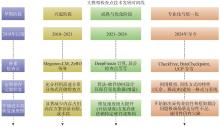
图1
大模型检查点技术发展时间线示意图"
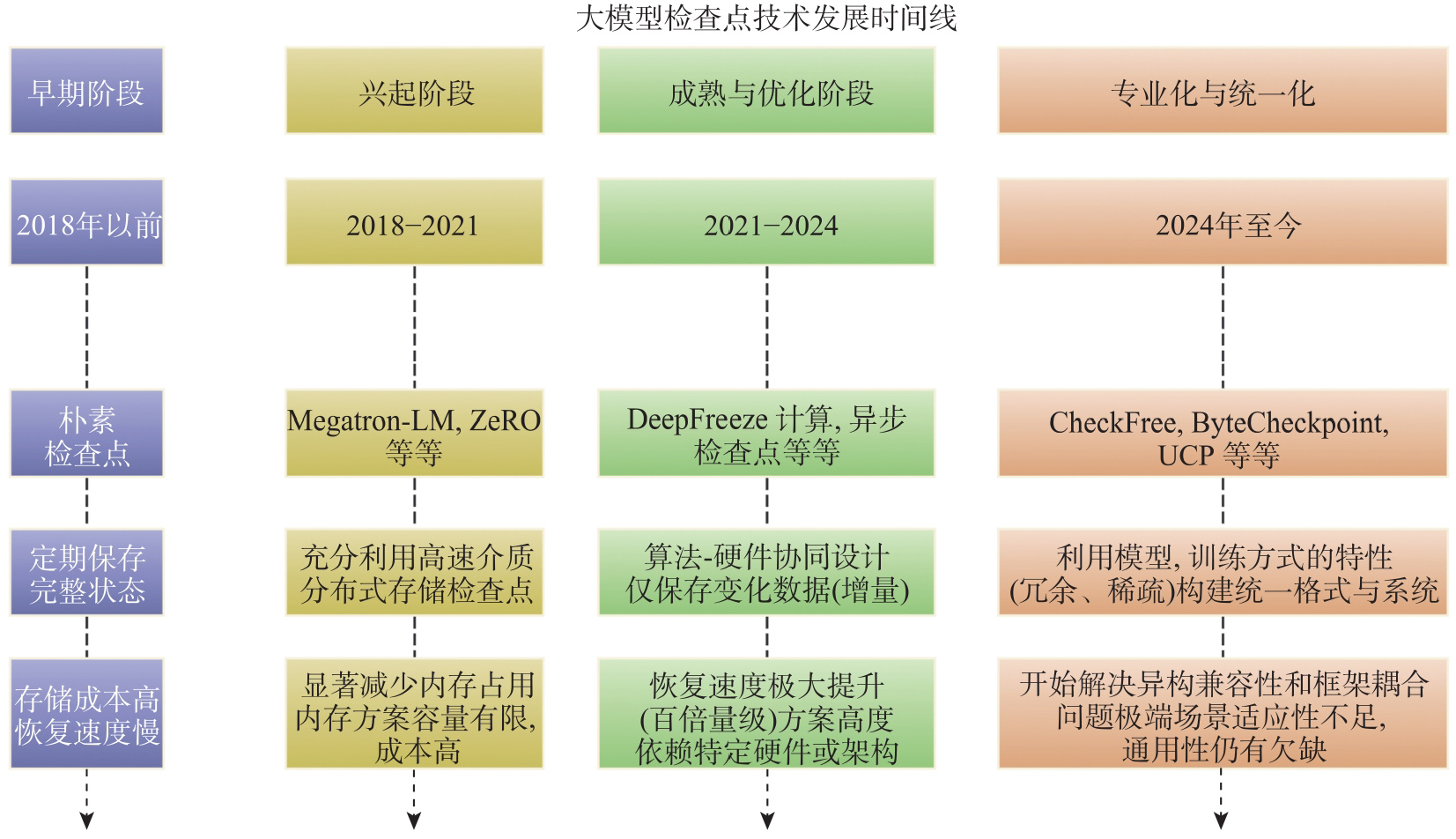
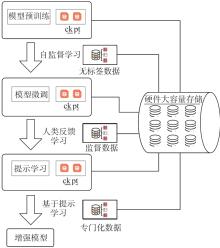
图2
大模型训练总流程图"
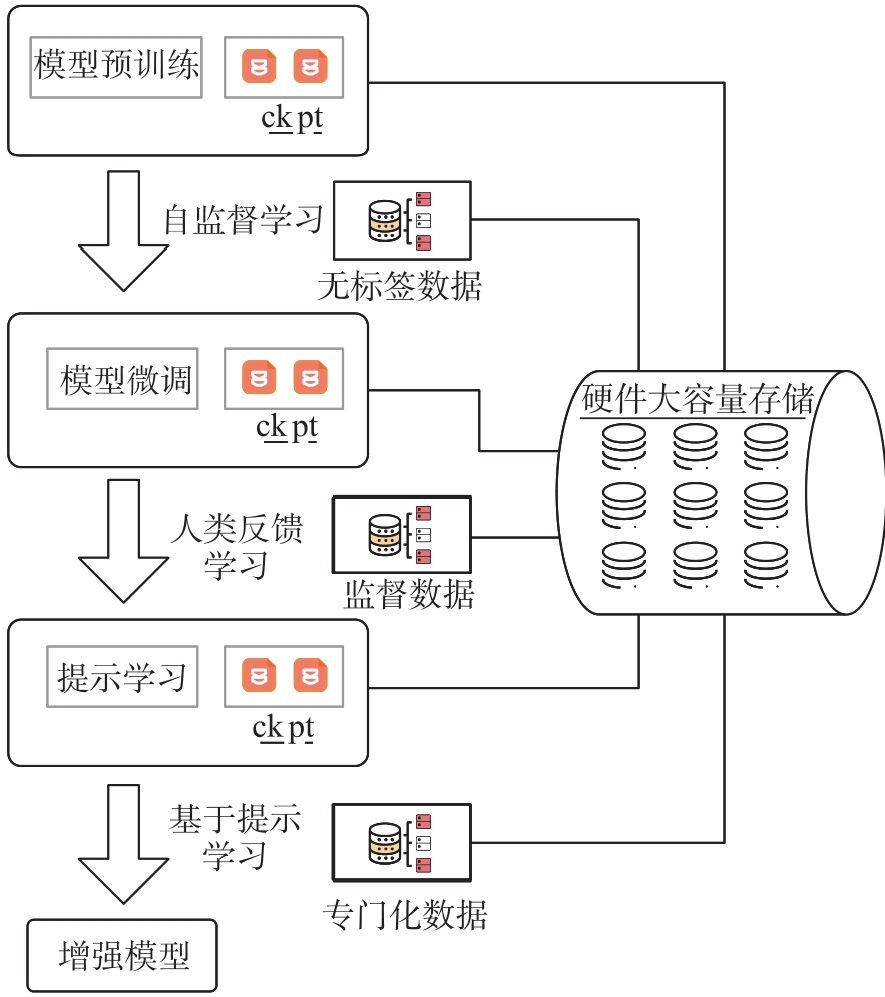
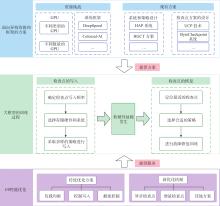
图3
大模型检查点管理与优化策略框架概览图"
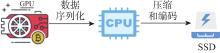
图4
检查点的写入过程图"
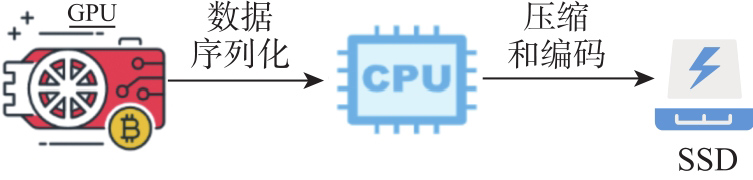

表1
Llama3 405b预训练54天期间意外中断的根本原因分类[41]"
| 组件 | 类别 | 中断次数 | 中断占比 |
|---|---|---|---|
| Faulty GPU | GPU | 148 | 30.1% |
| GPU HBM3 Memory | GPU | 72 | 17.2% |
| Software Bug | Dependency | 54 | 12.6% |
| Network Switch/Cable | Network | 32 | 7.3% |
| Host Maintenance | Unplanned Maintenance | 32 | 7.0% |
| GPU SRAM Memory | GPU | 19 | 4.6% |
| GPU System Processor | GPU | 17 | 4.0% |
| NIC | Host | 7 | 1.7% |
| NCCL Watchdog Timeouts | Unknown | 7 | 1.7% |
| Silent Data Corruption | GPU | 7 | 1.4% |
| GPU Thermal Interface+Sensor | GPU | 6 | 1.3% |
| SSD | Host | 3 | 0.7% |
| Power Supply | Host | 3 | 0.7% |
| Server Chassis | Host | 3 | 0.7% |
| IO Expansion Board | Host | 2 | 0.5% |
| Dependency | Dependency | 2 | 0.5% |
| CPU | Host | 2 | 0.5% |
| System Memory | Host | 2 | 0.5% |
图5
大模型训练中断恢复过程"
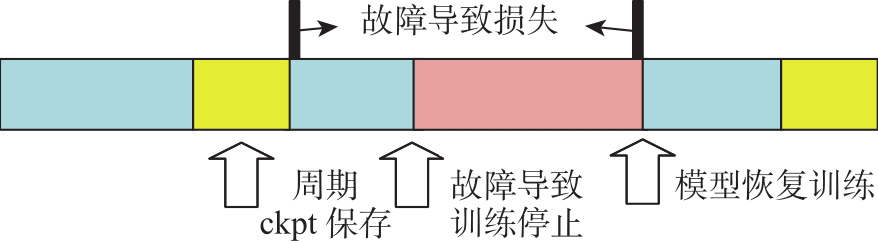
表2
大模型检查点核心技术多维度对比表"
| 技术类别 | 核心技术方案 | 存储效率 | 恢复速度 | 适用场景 | 优点 | 缺点 | 对应文献 |
|---|---|---|---|---|---|---|---|
| 检查点写入 | 智能压缩策略 | 高 | 中 | 存储受限场景、大规模模型训练 | 压缩率高,恢复速度提升;近乎无损恢复 | 有损压缩可能丢失梯度信息;高计算复杂度需额外GPU算力 | [ |
| 动态频率管理 | 中 | 中 | 各类模型训练、高频保存需求场景 | 基于训练状态自适应调整频次;CPU内存实现低延迟高频保存 | 数学模型假设与实际环境存在偏差;CPU内存容量限制 | [ | |
| 硬件-算法协同写入 | 中 | 较高 | 稀疏神经网络、计算密集型训练 | 序列长度或网络规模数倍扩展;利用内存加速创建 | 依赖专用硬件;大规模节点内存协调复杂 | [ | |
| 中间检查点合并 | 中 | 中 | 预训练阶段,混合专家模型预训练、参数高效微调 | 近乎零额外成本,提升模型推理泛化能力 | 依赖验证集选择,早期训练阶段效果有限,跨任务泛化能力弱 | [ | |
| 检查点恢复与容错 | 自动化故障感知恢复 | 高 | 较高 | 大规模分布式训练、国产化硬件环境 | 自动检测大部分故障;千亿级模型快速恢复 | 超高频故障稳定性不足;非 NVIDIA硬件支持有限 | [ |
| 极速无阻塞恢复 | 高 | 极高 | 弱计算节点环境、数据并行架构 | 无备份恢复;零训练阻塞 | 依赖模型层间冗余;仅支持非加密通信 | [ | |
| 结构化恢复框架 | 高 | 中 | Sparse MoE 模型、分布式训练 | 降低存储开销;分层快照保障一致性 | 通用模型兼容性差;分层管理复杂度高 | [ | |
| I/O性能优化 | 传统I/O调度优化 | 中 | 中 | OpenMP应用、Lustre文件系统环境 | 减少线程负载不均衡;稳定吞吐量 | 适配性有限;需人工调试延迟参数 | [ |
| 异步加载与切分 | 高 | 高 | 异构框架、超大模型训练 | 存储性能提升;零冗余加载 | 弱网络环境延迟增加;依赖P2P通信 | [ | |
| 计算-I/O重叠技术 | 较高 | 较高 | 动态计算图框架(如PyTorch) | 嵌入张量副本实现并行,降低GPU空闲时间 | 不支持静态计算图框架(如TensorFlow) | [ | |
| 异构兼容 | 通用格式与切分方案 | 中 | 中 | 多并行策略、跨框架迁移 | 支持多种并行策略;元数据与张量分离实现解耦 | 依赖手动脚本转换;新型硬件兼容性待验证 | [ |
| 混合集群训练实践 | 中 | 中 | 多厂商GPU集群、70B以下模型 | 首次实现异构混合训练开源,精度损失<1% | 千亿级模型稳定性不足;仅支持 PyTorch | [ | |
| 通信与张量优化 | 中 | 中 | 异构GPU集群、复杂并行场景 | 优化分片策略与通信方式;降低跨设备延迟 | 对3D并行+MoE适配有限;大规模部署成本高 | [ |
| [1] | MIHALCEA R, LIU H, LIEBERMAN H. NLP (Natural Language Processing) for NLP (Natural Language Programming)[C]. Proceedings of the 7th International Conference on Computational Linguistics and Intelligent Text Processing (CICLing 2006), Berlin Heidelberg: Springer, 2006: 319-330. |
| [2] | VOULODIMOS A, DOULAMIS N, DOULAMIS A, et al. Deep Learning for Computer Vision: A Brief Review[J]. Computational Intelligence and Neuroscience, 2018, 2018(1): 7068349. |
| [3] |
BURKE R, FELFERNIG A, GÖKER M H. Recommender Systems: An Overview[J]. AI Magazine, 2011, 32(3): 13-18.
doi: 10.1609/aimag.v32i3.2361 |
| [4] | SHAW P, USZKOREIT J, VASWANI A. Self-Attention with Relative Position Representations[J]. arXiv Preprint arXiv:1803.02155, 2018. |
| [5] |
ROUMELIOTIS K I, TSELIKAS N D. ChatGPT and Open-AI Models: A Preliminary Review[J]. Future Internet, 2023, 15(6): 192.
doi: 10.3390/fi15060192 |
| [6] | ACHIAM J, ADLER S, AGARWAL S, et al. GPT-4 Technical Report[J]. arXiv Preprint arXiv:2303.08774, 2023. |
| [7] | ROUMELIOTIS K I, TSELIKAS N D, NASIOPOULOS D K. Llama 2: Early Adopters' Utilization of Meta’s New Open-Source Pretrained Model[J]. arXiv Preprint, 2023. |
| [8] | CHOWDHERY A, NARANG S, DEVLIN J, et al. PaLM: Scaling Language Modeling with Pathways[J]. Journal of Machine Learning Research, 2023, 24(240): 1-113. |
| [9] | SUN Y, WANG S, FENG S, et al. ERNIE 3.0: Large-Scale Knowledge Enhanced Pre-Training for Language Understanding and Generation[J]. arXiv Preprint arXiv:2107.02137, 2021. |
| [10] | ZENG W, REN X, SU T, et al. PanGu-α: Large-Scale Autoregressive Pretrained Chinese Language Models with Auto-Parallel Computation[J]. arXiv Preprint arXiv:2104.12369, 2021. |
| [11] | LIU J, ZHU X, LIU F, et al. OPT: Omni-Perception Pre-Trainer for Cross-Modal Understanding and Generation[J]. arXiv Preprint arXiv:2107.00249, 2021. |
| [12] | LIAO H, TU J, XIA J, et al. Ascend: A Scalable and Unified Architecture for Ubiquitous Deep Neural Network Computing: Industry Track Paper[C]. Proceedings of 2021 IEEE International Symposium on High-Performance Computer Architecture (HPCA), New York: IEEE, 2021: 789-801. |
| [13] | LI S, LIU H, BIAN Z, et al. Colossal-AI: A Unified Deep Learning System for Large-Scale Parallel Training[C]. Proceedings of the 52nd International Conference on Parallel Processing, 2023: 766-775. |
| [14] | RAJBHANDARI S, RASLEY J, RUWASE O, et al. ZeRO: Memory Optimizations toward Training Trillion Parameter Models[C]. Proceedings of SC20: International Conference for High Performance Computing, Networking, Storage and Analysis, New York: IEEE, 2020: 1-16. |
| [15] | LIU Y, NASSAR R, LEANGSUKSUN C, et al. An Optimal Checkpoint/Restart Model for a Large Scale High Performance Computing System[C]. Proceedings of 2008 IEEE International Symposium on Parallel and Distributed Processing, New York: IEEE, 2008: 1-9. |
| [16] | ROJAS E, KAHIRA A N, MENESES E, et al. A Study of Checkpointing in Large Scale Training of Deep Neural Networks[J]. arXiv Preprint arXiv:2012.00825, 2020. |
| [17] | CHANG Y S, CHO S Y, KIM B Y. Performance Evaluation of the Striped Checkpointing Algorithm on the Distributed RAID for Cluster Computer[C]. Proceedings of the 3rd International Conference on Computational Science (ICCS 2003), Berlin Heidelberg: Springer, 2003: 955-962. |
| [18] | RODAMILANS C B, BORIN E. Análise de Desempenho dos Serviços de Armazenamento da Nuvem Computacional para Execução de Checkpoint[C]. Proceedings of Escola Regional de Alto Desempenho de São Paulo (ERAD-SP), Porto Alegre: SBC, 2020: 86-89. |
| [19] | XU Q, SIYAMWALA H, GHOSH M, et al. Performance Analysis of NVMe SSDs and Their Implication on Real World Databases[C]. Proceedings of the 8th ACM International Systems and Storage Conference, New York: ACM, 2015: 1-11. |
| [20] | BORTHAKUR D. HDFS Architecture Guide[J]. Hadoop Apache Project, 2008, 53(1-13): 2. |
| [21] | WEIL S, BRANDT S A, MILLER E L, et al. Ceph:A Scalable, High-Performance Distributed File System[C]. Proceedings of the 7th Conference on Operating Systems Design and Implementation (OSDI'06), Berkeley: USENIX Association, 2006: 307-320. |
| [22] | WANG Z, JIA Z, ZHENG S, et al. Gemini: Fast Failure Recovery in Distributed Training with In-Memory Checkpoints[C]. Proceedings of the 29th Symposium on Operating Systems Principles, New York: ACM, 2023: 364-381. |
| [23] | SADI S, YAGOUBI B. On the Optimum Checkpointing Interval Selection for Variable Size Checkpoint Dumps[C]. Proceedings of the 5th IFIP TC 5 International Conference on Computer Science and Its Applications (CIIA 2015), Cham: Springer International Publishing, 2015: 599-610. |
| [24] | MOHAN J, PHANISHAYEE A, CHIDAMBARAM V. CheckFreq:Frequent, Fine-Grained DNN Checkpointing[C]. Proceedings of the 19th USENIX Conference on File and Storage Technologies (FAST 21), Berkeley: USENIX Association, 2021: 203-216. |
| [25] | WANG G, RUWASE O, XIE B, et al. FastPersist: Accelerating Model Checkpointing in Deep Learning[J]. arXiv Preprint arXiv:2406.13768, 2024. |
| [26] | HIRAGA S K K, TATEBE O. Fast Checkpointing of Large Language Models with TensorStore CHFS[J]. IEEE Transactions on Parallel and Distributed Systems, 2024. |
| [27] | COLLET Y, KUCHERAWY M. Zstandard Compression and the Application/zstd Media Type[R]. Fremont: Internet Engineering Task Force, 2018. |
| [28] | ISLAM T Z, MOHROR K, BAGCHI S, et al. MCREngine: A Scalable Checkpointing System Using Data-Aware Aggregation and Compression[C]. Proceedings of SC'12: International Conference on High Performance Computing, Networking, Storage and Analysis, New York: IEEE, 2012: 1-11. |
| [29] | CHEN Y, LIU Z, REN B, et al. On Efficient Constructions of Checkpoints[J]. arXiv Preprint arXiv:2009. 13003, 2020. |
| [30] | LI W, CHEN X, SHU H, et al. ExCP: Extreme LLM Checkpoint Compression via Weight-Momentum Joint Shrinking[J]. arXiv Preprint arXiv:2406.11257, 2024. |
| [31] | MOODY A, BRONEVETSKY G, MOHROR K, et al. Design, Modeling, and Evaluation of a Scalable Multi-Level Checkpointing System[C]. Proceedings of SC’10: 2010 ACM/IEEE International Conference for High Performance Computing, Networking, Storage and Analysis, New York: IEEE, 2010: 1-11. |
| [32] | AGARWAL S, GARG R, GUPTA M S, et al. Adaptive Incremental Checkpointing for Massively Parallel Systems[C]. Proceedings of the 18th Annual International Conference on Supercomputing, New York: ACM, 2004: 277-286. |
| [33] | LI L, FAN Y, TSE M, et al. A Review of Applications in Federated Learning[J]. Computers & Industrial Engineering, 2020, 149: 106854. |
| [34] | EISENMAN A, MATAM K K, INGRAM S, et al. Check-N-Run: A Checkpointing System for Training Deep Learning Recommendation Models[C]. Proceedings of the 19th USENIX Symposium on Networked Systems Design and Implementation (NSDI 22), Berkeley: USENIX Association, 2022: 929-943. |
| [35] | BENCHEIKH W, FINKBEINER J, NEFTCI E. Optimal Gradient Checkpointing for Sparse and Recurrent Architectures Using Off-Chip Memory[J]. arXiv Preprint arXiv:2412.11810, 2024. |
| [36] | LIU D, WANG Z, WANG B, et al. Maximizing Intermediate Checkpoint Value in LLM Pretraining with Bayesian Optimization[C]. Proceedings of the 42nd International Conference on Machine Learning, New York: PMLR, 2025. |
| [37] | HENDRYCKS D, BURNS C, BASART S, et al. Measuring Massive Multitask Language Understanding[J]. arXiv Preprint arXiv:2009.03300, 2020. |
| [38] | COBBE K, KOSARAJU V, BAVARIAN M, et al. Training Verifiers to Solve Math Word Problems[J]. arXiv Preprint arXiv:2110.14168, 2021. |
| [39] | LI Y, MA Y, YAN S, et al. Model Merging in Pre-Training of Large Language Models[J]. arXiv Preprint arXiv:2505.12082, 2025. |
| [40] | YU S J, CHOI S. Parameter-Efficient Checkpoint Merging via Metrics-Weighted Averaging[J]. arXiv Preprint arXiv:2504.18580, 2025. |
| [41] | DUBEY A, JAUHRI A, PANDEY A, et al. The Llama 3 Herd of Models[J]. arXiv Preprint arXiv:2407.21783, 2024. |
| [42] | JIANG Z, LIN H, ZHONG Y, et al. MegaScale: Scaling Large Language Model Training to More Than 10,000 GPUs[C]. Proceedings of the 21st USENIX Symposium on Networked Systems Design and Implementation (NSDI 24), Berkeley: USENIX Association, 2024: 745-760. |
| [43] | WANG Y, SHI S, HE X, et al. Reliable and Efficient In-Memory Fault Tolerance of Large Language Model Pretraining[J]. arXiv Preprint arXiv:2310.12670, 2023. |
| [44] | LI Y, YANG S L, LIU C C, et al. Resilio: An Elastic Training Fault-Tolerant System for Large Models[J]. Journal of Computer Research and Development, 2025, 62(6): 1380-1395. |
| [45] | BLAGOEV N, ERSOY O, CHEN L Y. All Is Not Lost: LLM Recovery without Checkpoints[J]. arXiv Preprint arXiv:2506.15461, 2025. |
| [46] | MAURYA A, UNDERWOOD R, RAFIQUE M M, et al. DataStates-LLM: Lazy Asynchronous Checkpointing for Large Language Models[C]. Proceedings of the 33rd International Symposium on High-Performance Parallel and Distributed Computing, New York: ACM, 2024: 227-239. |
| [47] | DLROVER TEAM. Flash Checkpoint on DLRover: 千亿参数模型训练秒级导出 Checkpoint[EB/OL]. (2024-02-20) [2026-03-17]. https://github.com/intelligent-machine-learning/dlrover/blob/master/docs/blogs/flash_checkpoint_cn.md. |
| [48] | CHEN L. Deep Learning and Practice with MindSpore[M]. Singapore: Springer Nature, 2021. |
| [49] | CAI W, QIN L, HUANG J. MoC-System: Efficient Fault Tolerance for Sparse Mixture-of-Experts Model Training[C]. Proceedings of the 30th ACM International Conference on Architectural Support for Programming Languages and Operating Systems, Volume 2, New York:ACM, 2025: 655-671. |
| [50] | HUANG Z, NIE H, JIA H, et al. FlowCheck: Decoupling Checkpointing and Training of Large-Scale Models[C]. Proceedings of the 20th European Conference on Computer Systems, New York: ACM, 2025: 1334-1349. |
| [51] | KOROTEEV M V. BERT: A Review of Applications in Natural Language Processing and Understanding[J]. arXiv Preprint arXiv:2103.11943, 2021. |
| [52] |
LOSADA N, MARTÍN M J, RODRÍGUEZ G, et al. Portable Application-Level Checkpointing for Hybrid MPI-OpenMP Applications[J]. Procedia Computer Science, 2016, 80: 19-29.
doi: 10.1016/j.procs.2016.05.294 |
| [53] | WANG N, SUN Q, LIU Y, et al. Mitigating I/O Impact of Checkpointing on Large Scale Parallel Systems[C]. Proceedings of 2018 IEEE 20th International Conference on High Performance Computing and Communications; IEEE 16th International Conference on Smart City; IEEE 4th International Conference on Data Science and Systems (HPCC/SmartCity/DSS), New York: IEEE, 2018: 117-123. |
| [54] | QIAN Y, YI R, DU Y, et al. Dynamic I/O Congestion Control in Scalable Lustre File System[C]. Proceedings of 2013 IEEE 29th Symposium on Mass Storage Systems and Technologies (MSST), New York: IEEE, 2013: 1-5. |
| [55] | CHIEN W D. Large-Scale I/O Models for Traditional and Emerging HPC Workloads on Next-Generation HPC Storage Systems[D]. Stockholm: Kungliga Tekniska Högskolan, 2022. |
| [56] | WAN B, HAN M, SHENG Y, et al. ByteCheckpoint: A Unified Checkpointing System for LLM Development[J]. arXiv Preprint arXiv:2407.20143, 2024. |
| [57] | NICOLAE B, LI J, WOZNIAK J M, et al. DeepFreeze: Towards Scalable Asynchronous Checkpointing of Deep Learning Models[C]. Proceedings of 2020 20th IEEE/ACM International Symposium on Cluster, Cloud and Internet Computing (CCGRID), New York: IEEE, 2020: 172-181. |
| [58] | XIONG H, BIAN J, YANG S, et al. Natural Language Based Context Modeling and Reasoning with LLMs: A Tutorial[J]. arXiv Preprint arXiv:2309.15074, 2023. |
| [59] | KIRK R, MEDIRATTA I, NALMPANTIS C, et al. Understanding the Effects of RLHF on LLM Generalisation and Diversity[J]. arXiv Preprint arXiv:2310. 06452, 2023. |
| [60] | GUGGER S, DEBUT L, WOLF T, et al. Accelerate: Training and Inference at Scale Made Simple, Efficient and Adaptable[J]. Journal of Open Source Software, 2022. |
| [61] | WAGENLÄNDER M, LI G, ZHAO B, et al. Tenplex: Dynamic parallelism for deep learning using parallelizable tensor collections[C]. Proceedings of the ACM SIGOPS 30th Symposium on Operating Systems Principles (SOSP 2024), 2024: 195-210. |
| [62] | LIAN X, JACOBS S A, KURILENKO L, et al. Universal Checkpointing: Efficient and Flexible Checkpointing for Large Scale Distributed Training[J]. arXiv Preprint arXiv:2406.18820, 2024. |
| [63] | NARAYANAN D, SHOEYBI M, CASPER J, et al. Efficient Large-Scale Language Model Training on GPU Clusters Using Megatron-LM[C]. Proceedings of the International Conference for High Performance Computing, Networking, Storage and Analysis, New York: IEEE/ACM, 2021: 1-15. |
| [64] | ZHU T, QU X, DONG D, et al. Llama-MoE: Building Mixture-of-Experts from Llama with Continual Pre-Training[C]. Proceedings of the 2024 Conference on Empirical Methods in Natural Language Processing, Stroudsburg: ACL, 2024: 15913-15923. |
| [65] | FRANTAR E, ALISTARH D. SparseGPT: Massive Language Models Can Be Accurately Pruned in One-Shot[C]. Proceedings of the 40th International Conference on Machine Learning, New York: PMLR, 2023: 10323-10337. |
| [66] | ZHANG B W, WANG L, LI J, et al. Aquila2 Technical Report[J]. arXiv Preprint arXiv:2408.07410, 2024. |
| [67] | ZHANG S, DIAO L, WU C, et al. HAP: SPMD DNN Training on Heterogeneous GPU Clusters with Automated Program Synthesis[C]. Proceedings of the 19th European Conference on Computer Systems, New York: ACM, 2024: 524-541. |
| [68] | XU S, HUANG Z, ZENG Y, et al. HETHUB: A Distributed Training System with Heterogeneous Cluster for Large-Scale Models[J]. IEEE Transactions on Parallel and Distributed Systems, 2024. |
| [69] | SHOEYBI M, PATWARY M, PURI R, et al. Megatron-LM: Training Multi-Billion Parameter Language Models Using Model Parallelism[J]. arXiv Preprint arXiv:1909.08053, 2019. |
| [70] | ZHAO Y, GU A, VARMA R, et al. PyTorch FSDP: Experiences on Scaling Fully Sharded Data Parallel[J]. arXiv Preprint arXiv:2304.11277, 2023. |
| [71] | RASLEY J, RAJBHANDARI S, RUWASE O, et al. DeepSpeed: System Optimizations Enable Training Deep Learning Models with over 100 Billion Parameters[C]. Proceedings of the 26th ACM SIGKDD International Conference on Knowledge Discovery & Data Mining, New York: ACM, 2020: 3505-3506. |
| No related articles found! |
| 阅读次数 | ||||||
|
全文 |
|
|||||
|
摘要 |
|
|||||

