| [1] |
郑起鼎, 王贺祥, 张洪玮. 一种基于分布式密钥与BLS签名的跨域认证方案[J]. 数据与计算发展前沿(中英文), 2024, 6(5): 13-23.
|
| [2] |
荆继武, 龙春, 李畅. 网络安全技术的新趋势探讨[J]. 数据与计算发展前沿, 2021, 3(3): 1-8.
|
| [3] |
潘静, 李博逊, 万贝琳, 等. 基于格的零知识证明综述[J]. 信息网络安全, 2025, 25(5): 679-688.
|
| [4] |
MAHARJAN P, SHRESTHA K, BHATTA T, et al. Keystroke dynamics based hybrid nanogenerators for biometric authentication and identification using artificial intelligence[J]. Advanced Science, 2021, 8(15): 2100711.
doi: 10.1002/advs.v8.15
|
| [5] |
BUDZYS A, KURASOVA O, MEDVEDEV V. Integrating deep learning and data fusion for advanced keystroke dynamics authentication[J]. Computer Standards & Interfaces, 2025, 92: 103931.
doi: 10.1016/j.csi.2024.103931
|
| [6] |
MONROSE F, RUBIN A. Authentication via keystroke dynamics[C]// Proceedings of the 4th ACM Conference on Computer and Communications Security, 1997: 48-56.
|
| [7] |
GUNETTI D, PICARDI C. Keystroke analysis of free text[J]. ACM Transactions on Information and System Security (TISSEC), 2005, 8(3): 312-347.
doi: 10.1145/1085126.1085129
|
| [8] |
LU X, ZHANG S, HUI P, et al. Continuous authentication by free-text keystroke based on CNN and RNN[J]. Computers & Security, 2020, 96: 101861.
doi: 10.1016/j.cose.2020.101861
|
| [9] |
YANG H, SUN D, WANG Y, et al. Fktan: Fusion keystroke time-textual attention networks for continuous authentication[C]// 2021 IEEE Symposium on Computers and Communications (ISCC), IEEE, 2021: 1-6.
|
| [10] |
BUDZYS A, KURASOVA O, MEDVEDEV V. Deep learning-based authentication for insider threat detection in critical infrastructure[J]. Artificial Intelligence Review, 2024, 57(10): 272.
doi: 10.1007/s10462-024-10893-1
|
| [11] |
ACIEN A, MORALES A, MONACO J V, et al. TypeNet: Deep learning keystroke biometrics[J]. IEEE Transactions on Biometrics, Behavior, and Identity Science, 2021, 4(1): 57-70.
doi: 10.1109/TBIOM.2021.3112540
|
| [12] |
STRAGAPEDE G, DELGADO-SANTOS P, TOLOSANA R, et al. TypeFormer: Transformers for mobile keystroke biometrics[J]. Neural Computing and Applications, 2024, 36(29): 18531-18545.
doi: 10.1007/s00521-024-10140-2
|
| [13] |
TEH P S, TEOH A B J, YUE S. A survey of keystroke dynamics biometrics[J]. The Scientific World Journal, 2013, 2013(1): 408280.
doi: 10.1155/tswj.v2013.1
|
| [14] |
HE K, ZHANG X, REN S, et al. Deep residual learning for image recognition[C]// Proceedings of the IEEE conference on computer vision and pattern recognition, 2016: 770-778.
|
| [15] |
RAHMAN N A, YUSOFF N. Modulated spike-time dependent plasticity (STDP)-based learning for spiking neural network (SNN): A review[J]. Neurocomputing, 2025, 618: 129170.
doi: 10.1016/j.neucom.2024.129170
|
| [16] |
HAN K, WANG Y, CHEN H, et al. A survey on vision transformer[J]. IEEE transactions on pattern analysis and machine intelligence, 2022, 45(1): 87-110.
doi: 10.1109/TPAMI.2022.3152247
|
| [17] |
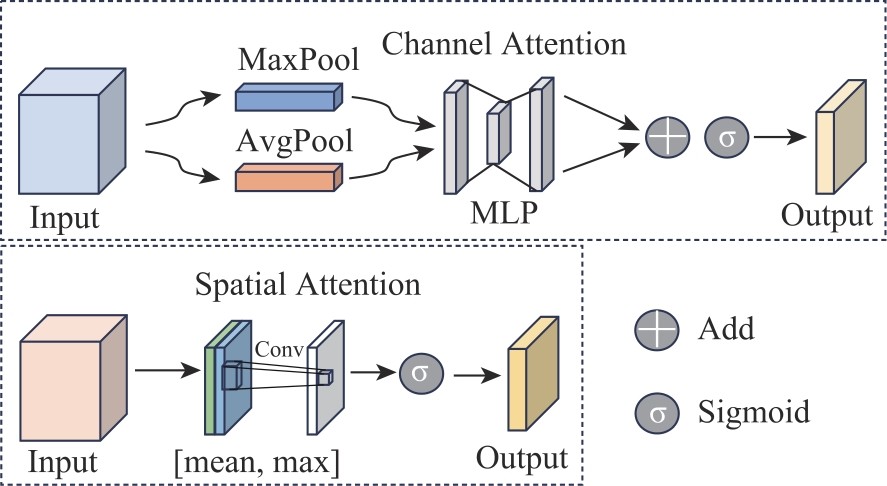
WOO S, PARK J, LEE J Y, et al. Cbam: Convolutional block attention module[C]// Proceedings of the European conference on computer vision (ECCV), 2018: 3-19.
|
| [18] |
DHAKAL V, FEIT A M, KRISTENSSON P O, et al. Observations on typing from 136 million keystrokes[C]// Proceedings of the 2018 CHI conference on human factors in computing systems, 2018: 1-12.
|
| [19] |
HUANG J, LING C X. Using AUC and accuracy in evaluating learning algorithms[J]. IEEE Transactions on knowledge and Data Engineering, 2005, 17(3): 299-310.
doi: 10.1109/TKDE.2005.50
|
| [20] |
ISMAIL M G, SALEM M A M, ABDELGHANY M A, et al. Outlier detection for keystroke biometric user authentication[J]. PeerJ Computer Science, 2024, 10: e2086.
doi: 10.7717/peerj-cs.2086
pmid: 38983219
|
| [21] |
YANG L, LI C, YOU R, et al. TKCA: a timely keystroke-based continuous user authentication with short keystroke sequence in uncontrolled settings[J]. Cybersecurity, 2021, 4: 1-16.
doi: 10.1186/s42400-020-00065-3
|
| [22] |
HAZAN I, MARGALIT O, ROKACH L. Supporting unknown number of users in keystroke dynamics models[J]. Knowledge-Based Systems, 2021, 221: 106982.
doi: 10.1016/j.knosys.2021.106982
|
 ),LI Peiyu1,LIN Yusong1,3,*(