Frontiers of Data and Computing ›› 2026, Vol. 8 ›› Issue (1): 168-182.
CSTR: 32002.14.jfdc.CN10-1649/TP.2026.01.014
doi: 10.11871/jfdc.issn.2096-742X.2026.01.014
• Technology and Application • Previous Articles Next Articles
WAN Meng1( ),HE Honglin2,3,4,REN Xiaoli2,3,NIE Ningming1,*(),CAO Rongqiang1,WANG Zongguo1,LI Kai1,WANG Xiaoguang1,WANG Yangang1,WANG Jue1,GAO Chao4
Received:2025-02-13
Online:2026-02-20
Published:2026-02-02
Contact:
NIE Ningming
E-mail:wanmengdamon@cnic.cn;nienm@sccas.cn
WAN Meng, HE Honglin, REN Xiaoli, NIE Ningming, CAO Rongqiang, WANG Zongguo, LI Kai, WANG Xiaoguang, WANG Yangang, WANG Jue, GAO Chao. The Real-Time Assimilation and Prediction System for Terrestrial Ecosystem Carbon Cycling Based on Workflow[J]. Frontiers of Data and Computing, 2026, 8(1): 168-182, https://cstr.cn/32002.14.jfdc.CN10-1649/TP.2026.01.014.
Fig.1
Automated data collection process of the prediction system"
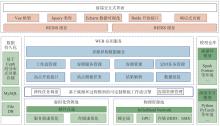
Fig.2
Architecture of the real-time assimilation and prediction system"
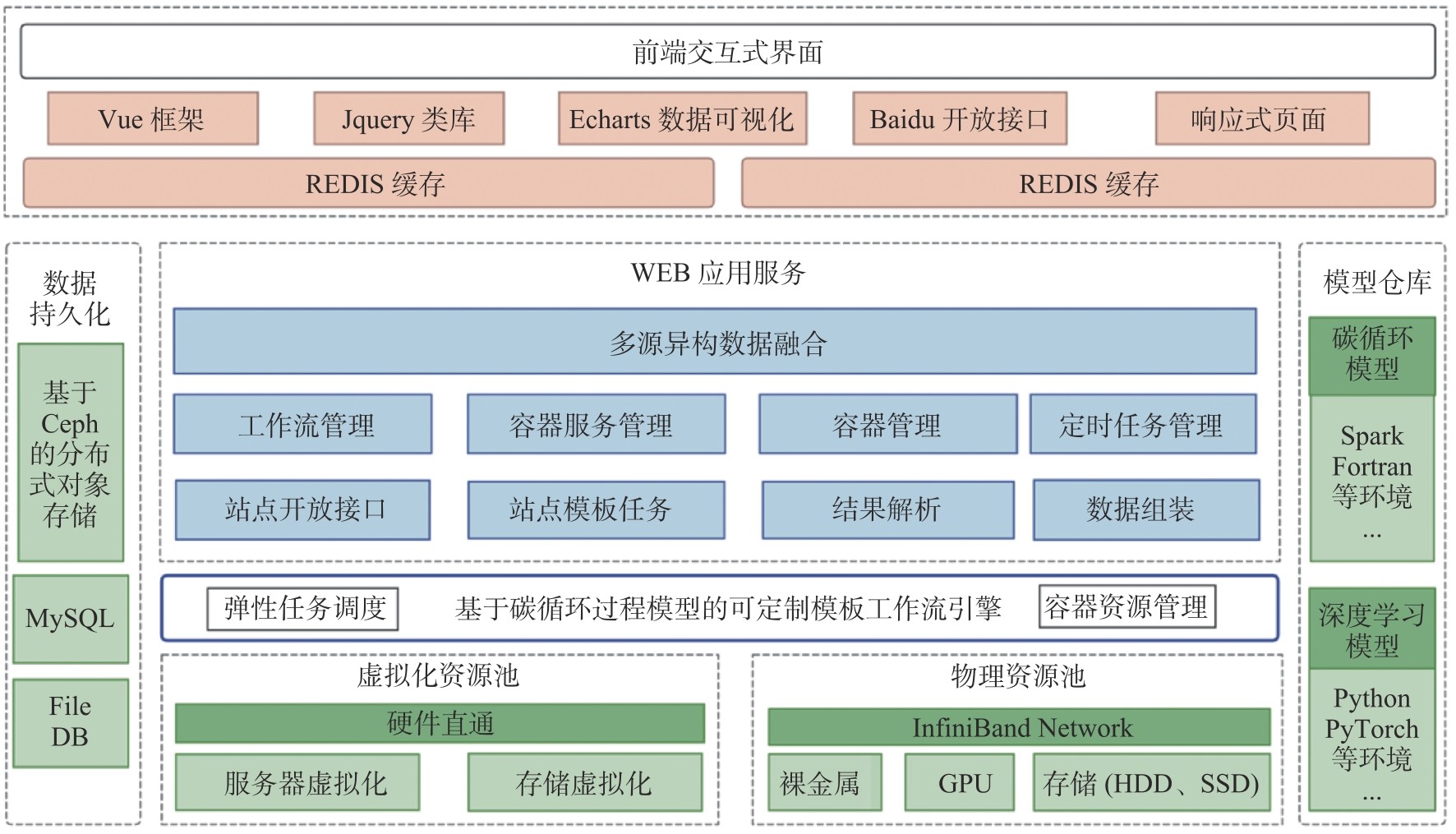
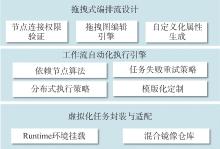
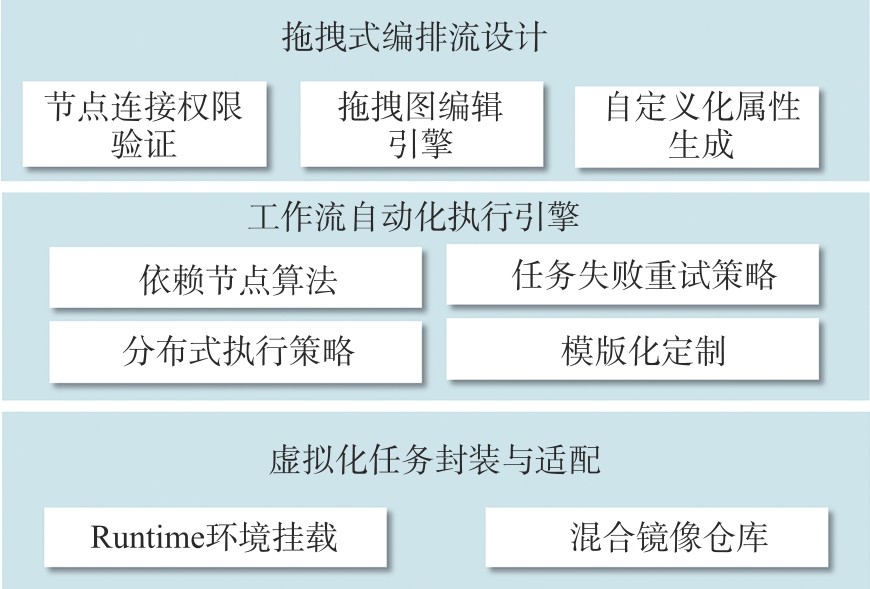
Fig.3
Workflow engine architecture"

"
| Algorithm 1: Micro-Service and Resource Allocation |
|---|
| Input: Model types for containers. Output: Resource allocation to available services. |
| 1:# 创建并注册容器 2:container_1← create_container('LSTM_model') 3:container_2← create_container('CNN_model') 4:kv_store[container_1]←register_service(container_1, 'available') 5:kv_store[container_2]←register_service(container_2, 'available') 6:# 动态发现并分配资源 7:for service in kv_store.values() do 8: if service['state'] == 'available' then 9: allocate_resources(service['address']) 10: end if 11:end for 12:# 创建容器 13:function create_container(model_type) 14:container_id←model_type+'_container_id' 15: return container_id 16:# 注册服务 17:function register_service(container_id, state) 18: address ← container_id + '_address' 19: return {'state': state, 'address': address} 20:# 分配资源 21:function allocate_resources(address) 22: resources_needed ← calculate(address) 23: allocate(resources_needed, address) |
Table 1
Key parameter information table in carbon cycle process"
| 名称 | 数据类型 | 单位 | 英文全称 | 缩写 | 时间分辨率(真实值) |
|---|---|---|---|---|---|
| 日均气温 | 碳循环驱动数据 | ℃ | Air Temperature | Ta | 天 |
| 光合有效辐射 | mol day-1 | Photosynthetically Active Radiation | PAR | 天 | |
| 相对湿度 | % | Relative Humidity | Rh | 天 | |
| 饱和水汽压差 | kPa | Vapor Pressure Deficit | VPD | 天 | |
| 土壤含水量 | m3m-3 | Soil Water Content | SWC | 天 | |
| 净生态系统生产力 | 碳通量 数据 | g C m-2 day-1 | Net Ecosystem Productivity | NEP | 5年 |
| 总初级生产力 | g C m-2 day-1 | Gross Primary Productivity | GPP | 5年 | |
| 净初级生产力 | g C m-2 day-1 | Net Primary Productivity | NPP | 5年 | |
| 叶碳分配量 | 碳循环全组分数据 (碳储量、关键参数等) | g C m-2 day-1 | Leaf Carbon Allocation | Af | 5年 |
| 叶碳密度 | g C m-2 | Leaf Carbon Density | Cf | 5年 | |
| 自养呼吸 | g C m-2 day-1 | Autotrophic Respiration | Ra | 5年 | |
| 植被碳密度 | g C m-2 | Vegetation Carbon Density | Cveg | 5年 | |
| 植被碳周转时间 | yr | Vegetation Carbon Turnover Time | τveg | 5年 | |
| 木质部碳分配量 | g C m-2 day-1 | Wood Carbon Allocation | Aw | 5年 | |
| 木质部碳密度 | g C m-2 | Wood Carbon Density | Cw | 5年 | |
| 根碳分配量 | g C m-2 day-1 | Root Carbon Allocation | Ar | 5年 | |
| 异养呼吸 | g C m-2 day-1 | Heterotrophic Respiration | Rh | 5年 | |
| 根碳密度 | g C m-2 | Root Carbon Density | Cr | 5年 | |
| 土壤碳密度 | g C m-2 day-1 | Soil Organic Carbon Density | Csom | 5年 | |
| 土壤碳周转时间 | yr | Soil Carbon Turnover Time | τsoil | 5年 |
Table 2
Comparison of predictive accuracy of driver data at various stations (Next 7 Days)"
| data | MSE (鼎湖山) | MAPE (鼎湖山) | MSE (千烟洲) | MAPE (千烟洲) | MSE (会同) | MAPE (会同) | MSE (尖峰岭) | MAPE (尖峰岭) |
|---|---|---|---|---|---|---|---|---|
| Ta | 0.045 | 0.165 | 0.040 | 0.152 | 0.043 | 0.158 | 0.038 | 0.149 |
| PAR | 0.055 | 0.185 | 0.050 | 0.179 | 0.052 | 0.182 | 0.048 | 0.175 |
| RH | 0.042 | 0.158 | 0.038 | 0.150 | 0.040 | 0.153 | 0.036 | 0.146 |
| VPD | 0.062 | 0.201 | 0.057 | 0.196 | 0.060 | 0.198 | 0.054 | 0.190 |
| SWC | 0.051 | 0.160 | — | — | — | — | — | — |
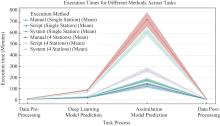
Fig.4
Comparison of execution time at different stages"
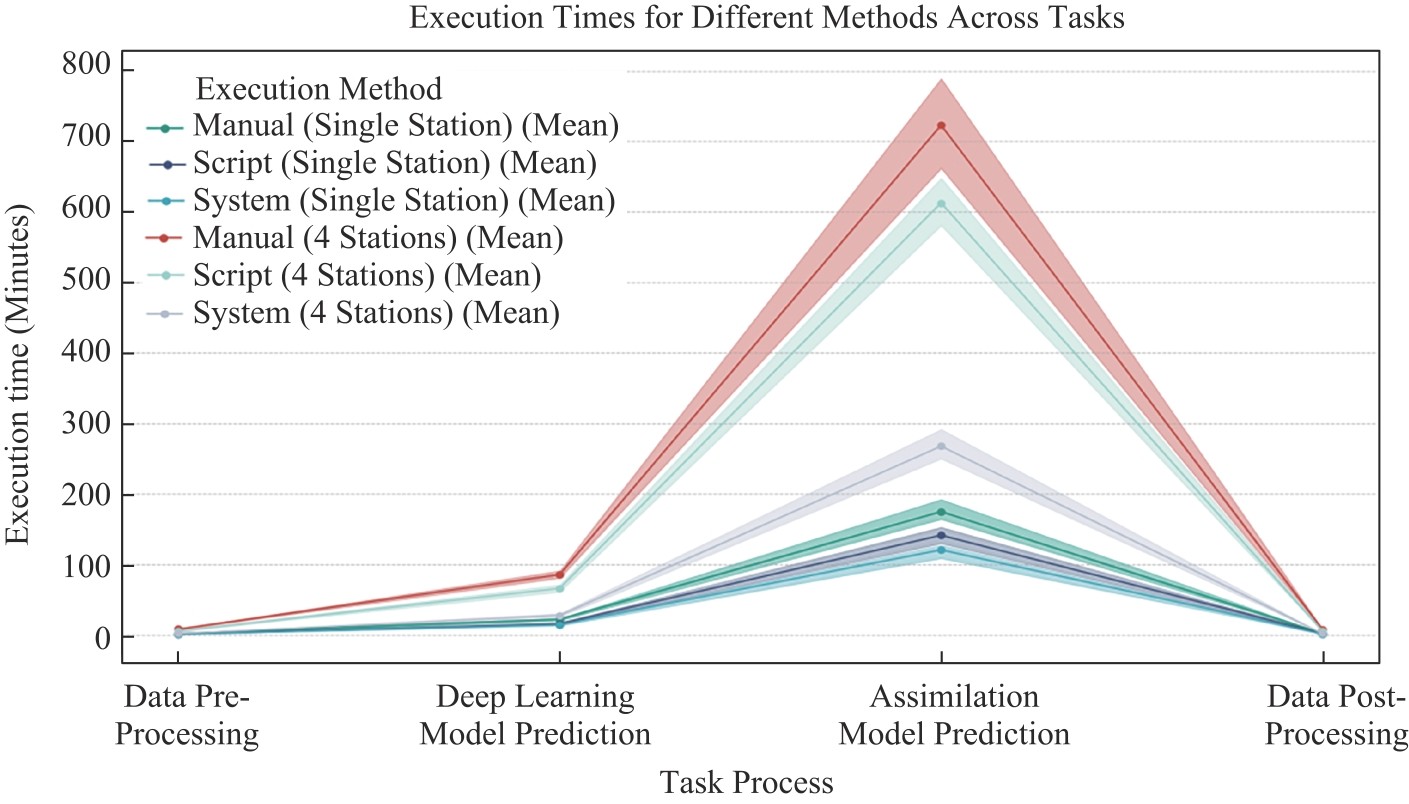
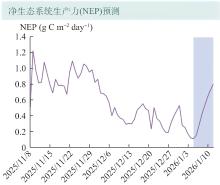
Fig.5
Ecological and meteorological data prediction result"
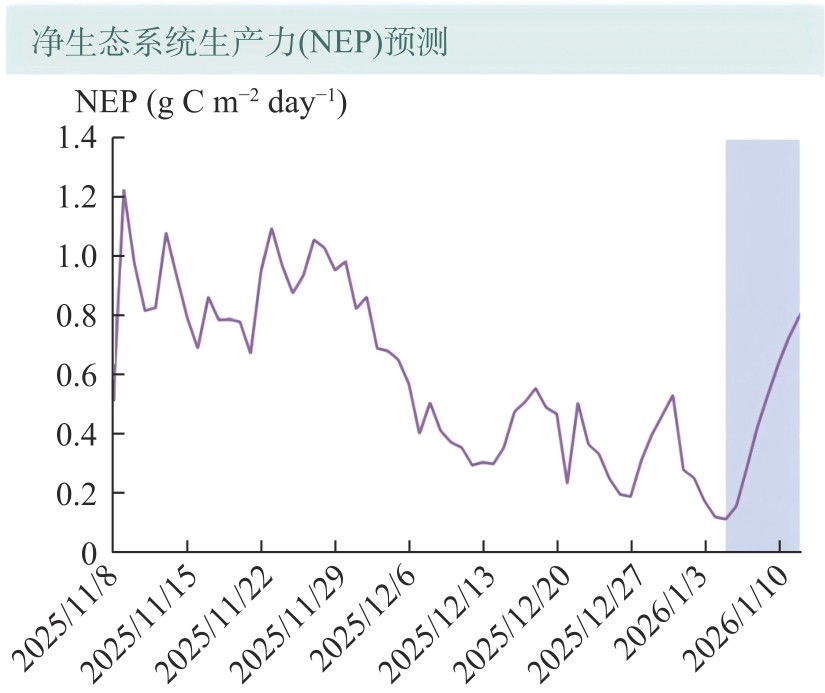
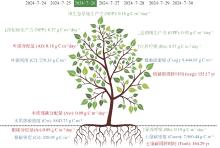
Fig.6
Interactive results of carbon cycle components"
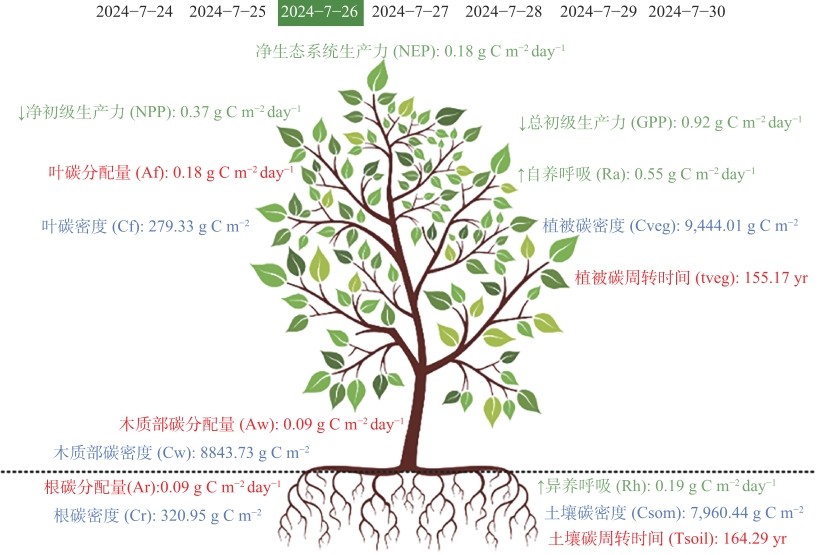
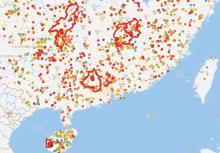
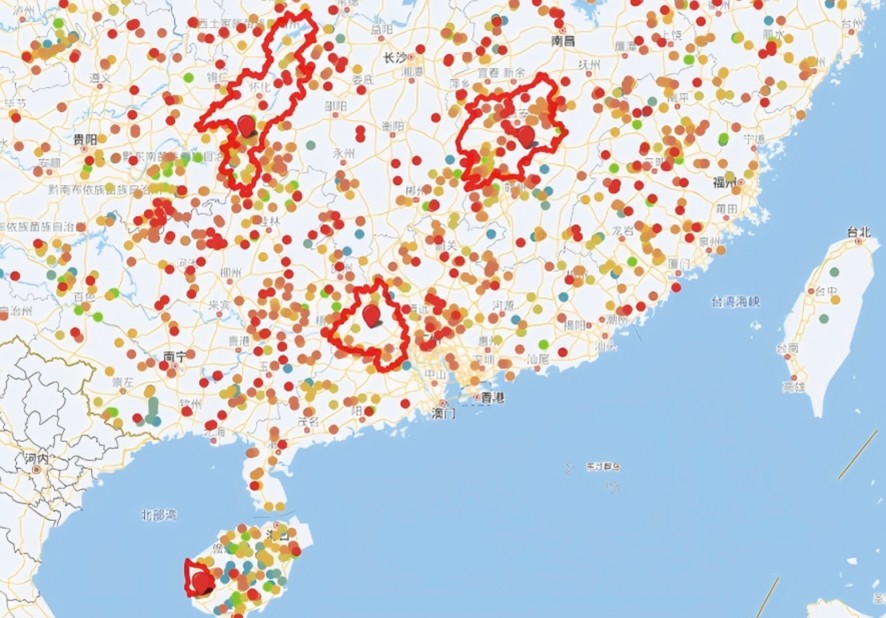
Fig.7
Spatial distribution of the 4 ecological observation stations"
| [1] | ZHAO X, MA X, CHEN B, et al. Challenges toward carbon neutrality in China: Strategies and countermeasures[J]. Resources, Conservation and Recycling, 2022, 1(176): 105959. |
| [2] | WANG Y, GUO C, CHEN X, et al. Carbon peak and carbon neutrality in China: Goals, implementation path and prospects[J]. China Geology, 2021, 4(4): 720-746. |
| [3] |
WEI Y, CHEN K, KANG J, et al. Policy and management of carbon peaking and carbon neutrality: A literature review[J]. Engineering, 2022, 14: 52-63.
doi: 10.1016/j.eng.2021.12.018 |
| [4] | ZHAO W. China's goal of achieving carbon neutrality before 2060: experts explain how[J]. National Science Review, 2022, 9(8): nwac115. |
| [5] | LIU Z, DENG Z, HE G, et al. Challenges and opportunities for carbon neutrality in China[J]. Nature Reviews Earth & Environment, 2022, 3(2): 141-155. |
| [6] |
LIU M, DONG X, WANG X, et al. Evaluating the future terrestrial ecosystem contributions to carbon neutrality in Qinghai-Tibet Plateau[J]. Journal of Cleaner Production, 2022, 374: 133914.
doi: 10.1016/j.jclepro.2022.133914 |
| [7] |
HU Y, ZHANG Q, HU S, et al. Research progress and prospects of ecosystem carbon sequestration under climate change (1992-2022)[J]. Ecological Indicators, 2022, 145: 109656.
doi: 10.1016/j.ecolind.2022.109656 |
| [8] | YU G, ZHU J, XU L, et al. Technological approaches to enhance ecosystem carbon sink in China: Nature-based solutions[J]. Bulletin of Chinese Academy of Sciences (Chinese Version), 2022, 37(4): 490-501. |
| [9] |
TIAN S, WU W, CHEN S, et al. Global trends in carbon sequestration and oxygen release: From the past to the future[J]. Resources, Conservation and Recycling, 2023, 199: 107279.
doi: 10.1016/j.resconrec.2023.107279 |
| [10] |
ZHAO M, HE Z, DU J, et al. Assessing the effects of ecological engineering on carbon storage by linking the CA-Markov and InVEST models[J]. Ecological Indicators, 2019, 98: 29-38.
doi: 10.1016/j.ecolind.2018.10.052 |
| [11] |
PENG C, GUIOT J, WU H, et al. Integrating models with data in ecology and palaeoecology: advances towards a model-data fusion approach[J]. Ecology Letters, 2011, 14(5): 522-536.
doi: 10.1111/j.1461-0248.2011.01603.x pmid: 21366814 |
| [12] | XU X, YANG G, TAN Y, et al. Ecological risk assessment of ecosystem services in the Taihu Lake Basin of China from 1985 to 2020[J]. Science of the Total Environment, 2016, 554: 7-16. |
| [13] |
METZGER M, SCHRÖTER D, LEEMANS R, et al. A spatially explicit and quantitative vulnerability assessment of ecosystem service change in Europe[J]. Regional Environmental Change, 2008, 8: 91-107.
doi: 10.1007/s10113-008-0044-x |
| [14] |
HONG W, JIANG R, YANG C, et al. Establishing an ecological vulnerability assessment indicator system for spatial recognition and management of ecologically vulnerable areas in highly urbanized regions: A case study of Shenzhen, China[J]. Ecological Indicators, 2016, 69: 540-547.
doi: 10.1016/j.ecolind.2016.05.028 |
| [15] |
DIETZE M, FOX A, BECK-JOHNSON L, et al. Iterative near-term ecological forecasting: Needs, opportunities, and challenges[J]. Proceedings of the National Academy of Sciences, 2018, 115(7): 1424-1432.
doi: 10.1073/pnas.1710231115 |
| [16] |
FARLEY S, DAWSON A, GORING S, et al. Situating ecology as a big-data science: current advances, challenges, and solutions[J]. BioScience, 2018, 68(8): 563-576.
doi: 10.1093/biosci/biy068 |
| [17] |
SUN A, SCANLON B. How can Big Data and machine learning benefit environment and water management: a survey of methods, applications, and future directions[J]. Environmental Research Letters, 2019, 14(7): 073001.
doi: 10.1088/1748-9326/ab1b7d |
| [18] | DIETZE M, THOMAS R, PETERS J, et al. A community convention for ecological forecasting: Output files and metadata[R]. 2023. |
| [19] |
HOUGHTON R. Interactions between land-use change and climate-carbon cycle feedbacks[J]. Current Climate Change Reports, 2018, 4: 115-127.
doi: 10.1007/s40641-018-0099-9 |
| [20] |
SCHOLZ K, HAMMERLE A, HILTBRUNNER E, et al. Analyzing the effects of growing season length on the net ecosystem production of an alpine grassland using model-data fusion[J]. Ecosystems, 2018, 21: 982-999.
doi: 10.1007/s10021-017-0201-5 |
| [21] | MURAWSKI S, MATLOCK G. Ecosystem science capabilities required to support NOAA’s mission in the year 2020[R]. 2020. |
| [22] |
RINCON D, ESCH E, GUTIERREZ-ILLAN J, et al. Predicting insect population dynamics by linking phenology models and monitoring data[J]. Ecological Modelling, 2024, 493: 110763.
doi: 10.1016/j.ecolmodel.2024.110763 |
| [23] |
GREEN S, GROSHOLZ E. Functional eradication as a framework for invasive species control[J]. Frontiers in Ecology and the Environment, 2021, 19(2): 98-107.
doi: 10.1002/fee.v19.2 |
| [24] |
KOEHLER J, KUENZER C. Forecasting spatio-temporal dynamics on the land surface using earth observation data—A review[J]. Remote Sensing, 2020, 12(21): 3513.
doi: 10.3390/rs12213513 |
| [25] |
SCOWEN M, ATHANASIADIS I, BULLOCK J, et al. The current and future uses of machine learning in ecosystem service research[J]. Science of the Total Environment, 2021, 799: 149263.
doi: 10.1016/j.scitotenv.2021.149263 |
| [26] | WANG Y, JIANG R, XIE J, et al. Water resources management under changing environment: A systematic review[J]. Journal of Coastal Research, 2020, 104(SI): 29-41. |
| [27] | VILLARREAL S, VARGAS R. Representativeness of FLUXNET sites across Latin America[J]. Journal of Geophysical Research: Biogeosciences, 2021, 126(3): e2020JG006090. |
| [28] |
WU H, FU C, WU H, et al. Influence of the dry event induced hydraulic redistribution on water and carbon cycles at five AsiaFlux forest sites: A site study combining measurements and modeling[J]. Journal of Hydrology, 2020, 587: 124979.
doi: 10.1016/j.jhydrol.2020.124979 |
| [29] |
YU G, WEN X, SUN X, et al. Overview of ChinaFLUX and evaluation of its eddy covariance measurement[J]. Agricultural and Forest Meteorology, 2006, 137(3-4): 125-137.
doi: 10.1016/j.agrformet.2006.02.011 |
| [30] | YLIVINKKA I, ITÄMIES J, KLEMOLA T, et al. Investigating evidence of enhanced aerosol formation and growth due to autumnal moth larvae feeding on mountain birch at SMEAR I in northern Finland[J]. Boreal Environment Research, 2020, 25(1-6): 1. |
| [31] |
ITO A, ICHII K. Terrestrial ecosystem model studies and their contributions to AsiaFlux[J]. Journal of Agricultural Meteorology, 2021, 77(1): 81-95.
doi: 10.2480/agrmet.D-20-00024 |
| [32] |
REICHSTEIN M, CAMPS-VALLS G, STEVENS B, et al. Deep learning and process understanding for data-driven Earth system science[J]. Nature, 2019, 566(7743): 195-204.
doi: 10.1038/s41586-019-0912-1 |
| [33] | DE ALMEIDA V, FRANÇA G, VELHO H, et al. Artificial neural network for data assimilation by WRF model in Rio de Janeiro, Brazil[J]. Brazilian Journal of Geophysics, 2020, 38(2). |
| [34] |
WANG G, WAN Y, DING C, et al. A review of applied research on low-carbon urban design: based on scientific knowledge mapping[J]. Environmental Science and Pollution Research, 2023, 30(47): 103513-103533.
doi: 10.1007/s11356-023-29490-w |
| [35] |
GENG G, XIAO Q, LIU S, et al. Tracking air pollution in China: near real-time PM2.5 retrievals from multisource data fusion[J]. Environmental Science & Technology, 2021, 55(17): 12106-12115.
doi: 10.1021/acs.est.1c01863 |
| [36] |
SAEED H, HARTLAND A, LEHTO N, et al. Regulation of phosphorus bioavailability by iron nanoparticles in a monomictic lake[J]. Scientific Reports, 2018, 8(1): 17736.
doi: 10.1038/s41598-018-36103-x pmid: 30531915 |
| [37] |
LI Z, CHEN Z, ZHANG F, et al. Global carbon cycle perturbations triggered by volatile volcanism and ecosystem responses during the Carnian Pluvial Episode (late Triassic)[J]. Earth-Science Reviews, 2020, 211: 103404.
doi: 10.1016/j.earscirev.2020.103404 |
| [38] | OURNANI Z. Software eco-design: investigating and reducing the energy consumption of software[D]. Université de Lille, 2021. |
| [39] |
BOETTIGER C. An introduction to Docker for reproducible research[J]. ACM SIGOPS Operating Systems Review, 2015, 49(1): 71-79.
doi: 10.1145/2723872.2723882 |
| [1] | PAN Yuquan,YUAN Deyu,JIA Yuan,WANG Anran. VGAT-VGAN Across Social Networks User Identity Linkage Algorithm Based on Fusion Features [J]. Frontiers of Data and Computing, 2026, 8(1): 103-118. |
| [2] | CAI Yi,WANG Xiaobin,CHEN Ruili,HAN Xun. Review of Research on Gender and Age Detection of Writers Based on Handwriting [J]. Frontiers of Data and Computing, 2026, 8(1): 129-147. |
| [3] | DENG Yiru,HE Hongbo,WANG Ying,WANG Runqiang. Network Public Opinion Tendency Detection Method Based on Sentiment Analysis [J]. Frontiers of Data and Computing, 2026, 8(1): 91-102. |
| [4] | YANG Qinmeng,NIE Ningming,ZHOU Chunbao,WANG Yangang. Algorithm for Taylor Bar Collision Data Simulation Based on Deep Learning [J]. Frontiers of Data and Computing, 2025, 7(6): 101-110. |
| [5] | ZHOU Faguo,LIU Fang,WANG Yangang,WANG Jue,YU Miao,LI Shunde,ZHOU Chunbao,WANG Jing,YANG Qinmeng. Porting and Adapting Deep Learning Framework Operators on Domestic Supercomputers [J]. Frontiers of Data and Computing, 2025, 7(6): 136-148. |
| [6] | LINGHU Rongwei,ZHANG Yu,SHI Yuanquan,YANG Yujun. Multi-Feature Fusion-Based Detection and Classification of Portable Executable Malware [J]. Frontiers of Data and Computing, 2025, 7(6): 77-91. |
| [7] | XIN Yuhang,WANG Qiyi,SUN Jing,ZHAO Chunyan,LIU Yujia,LIANG Xue,CHEN Jie. Application of Radar Echo Extrapolation Based Model TrajCast on Domestic Accelerators for Short-Term and Imminent Precipitation Forecasting [J]. Frontiers of Data and Computing, 2025, 7(5): 113-122. |
| [8] | WANG Peng,YANG Xiaofeng,HE Zhongchen,DU Jun. Multispectral Remote Sensing Image Pansharpening Method Based on Shallow-Deep Convolutional Recurrent Neural Network [J]. Frontiers of Data and Computing, 2025, 7(5): 138-152. |
| [9] | ZENG Yan,WU Baofu,YI Guangzheng,HUANG Chengchuang,QIU Yang,CHEN Yue,WAN Jian,HU Fan,JIN Sicong,LIANG Jiajun,LI Xin. FlowAware: A Feature-Aware Automated Model Parallelization Method for AI-for-Science Tasks [J]. Frontiers of Data and Computing, 2025, 7(5): 65-87. |
| [10] | JIA Ziang. Teeth Structure Segmentation Based on Multi-Source Semi-Supervised Learning [J]. Frontiers of Data and Computing, 2025, 7(2): 175-185. |
| [11] | MA Qiuping, ZHANG Qi, ZHAO Xiaofan. Review of Research on Chart Question Answering [J]. Frontiers of Data and Computing, 2025, 7(1): 19-37. |
| [12] | SHUI Yingyi, ZHANG Qi, LI Gen, ZHANG Shihao, WU Shang. A Review of Research on Social Network Influence Prediction Based on Multi-Class Features [J]. Frontiers of Data and Computing, 2025, 7(1): 2-18. |
| [13] | JIN Jiali, GAO Siyuan, GAO Manda, WANG Wenbin, LIU Shaozhen, SUN Zhenan. A Survey of Face Age Editing Based on Generative Adversarial Networks and Diffusion Models [J]. Frontiers of Data and Computing, 2025, 7(1): 38-55. |
| [14] | LU Chenghao,CHEN Xiuhong. IPDFF: Reconstructed Surface Network Based on Implicit Partition Learning Deep Feature Fusion [J]. Frontiers of Data and Computing, 2024, 6(6): 19-31. |
| [15] | WEI Yijin,FAN Jingchao. Classification Model of Agricultural Science and Technology Policies Based on Improved BERT-BiGRU-Attention [J]. Frontiers of Data and Computing, 2024, 6(6): 53-61. |
| Viewed | ||||||
|
Full text |
|
|||||
|
Abstract |
|
|||||

