Frontiers of Data and Computing ›› 2026, Vol. 8 ›› Issue (4): 162-178.
CSTR: 32002.14.jfdc.CN10-1649/TP.2026.04.012
doi: 10.11871/jfdc.issn.2096-742X.2026.04.012
Previous Articles Next Articles
LIN Yusong1,2( ),LIANG Zhenyu1,ZHAO Zhe()
Received:2025-11-04
Online:2026-08-20
Published:2026-08-21
LIN Yusong, LIANG Zhenyu, ZHAO Zhe. PMDeUNet: a Lightweight Network Model for the Efficient Segmentation of Abdominal Medical Image[J]. Frontiers of Data and Computing, 2026, 8(4): 162-178, https://cstr.cn/32002.14.jfdc.CN10-1649/TP.2026.04.012.
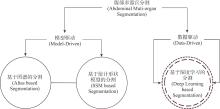
Fig.1
Three types of ideas for multi-organ segmentation in abdominal imaging"
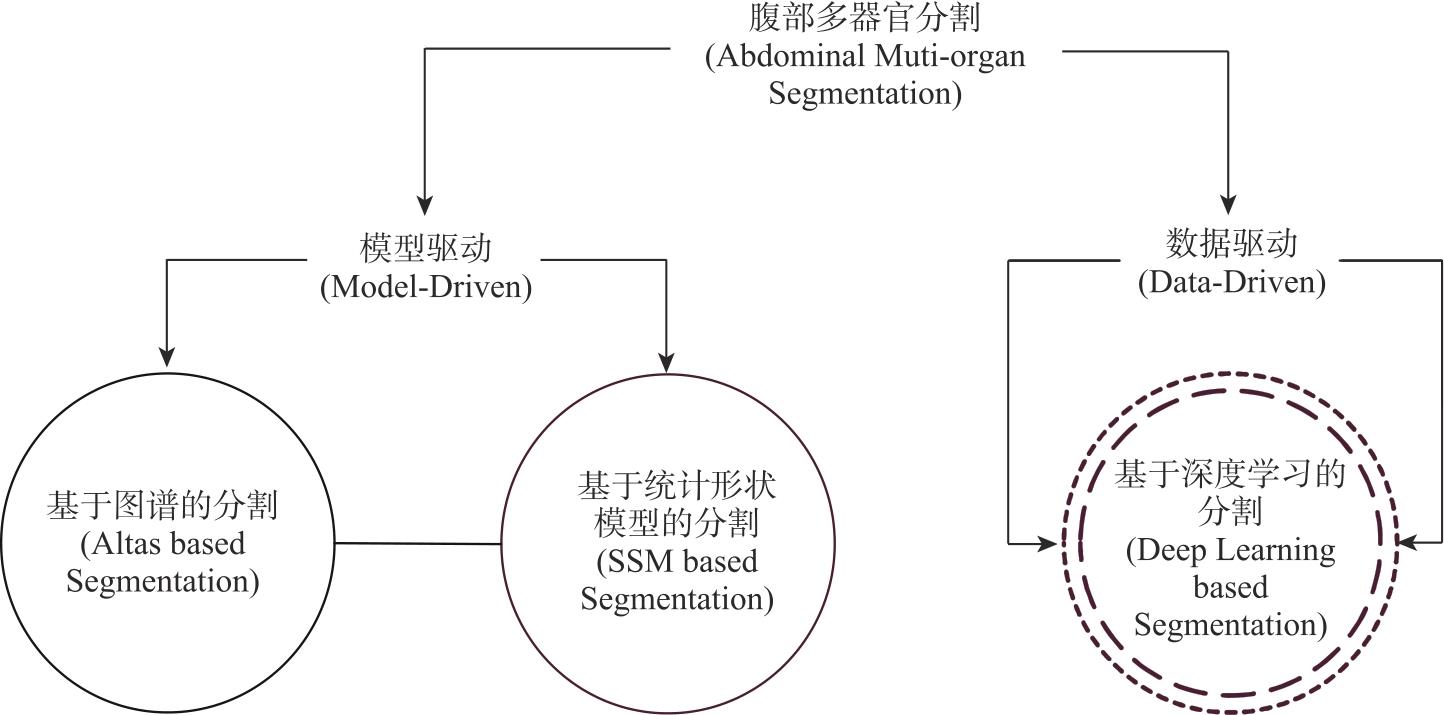
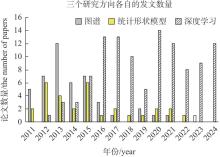
Fig.2
The respective number of published papers in these three research directions in recent years"
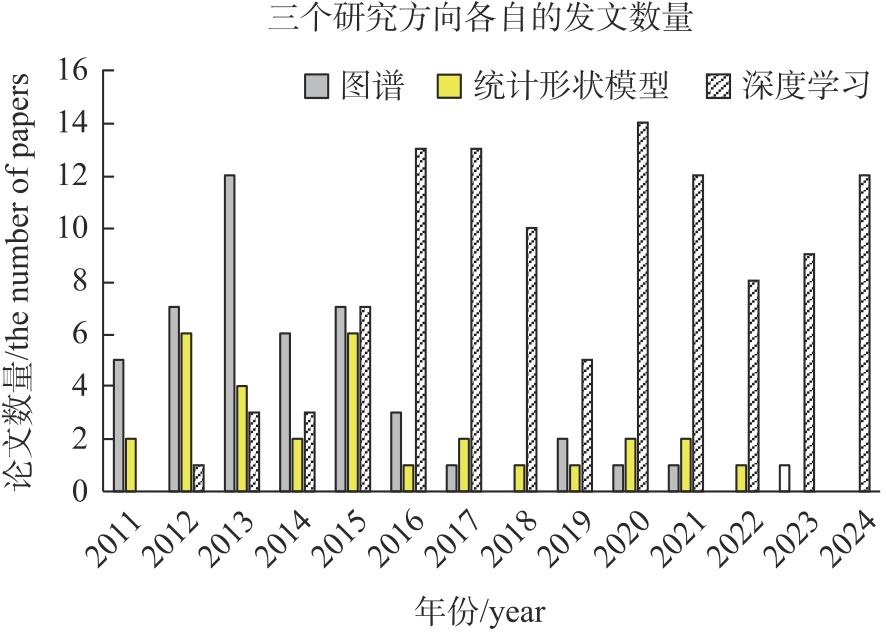
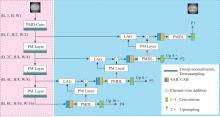
Fig.3
The overall architecture of our model"
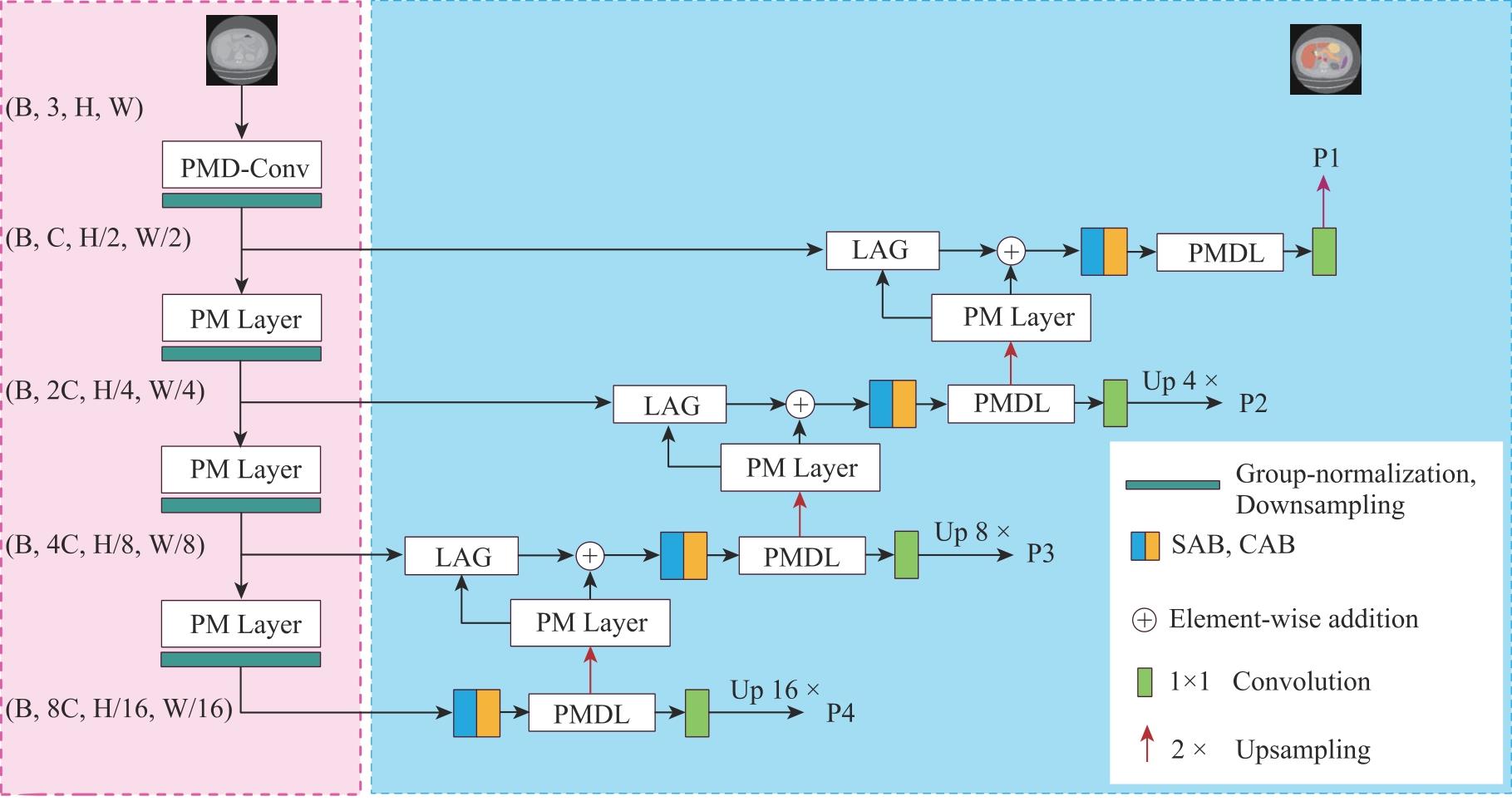
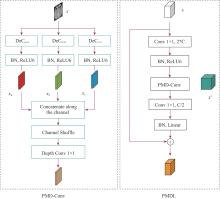
Fig.4
The parallel multi-scale deformable convolution module (left) and the parallel multi-scale deformable convolution layer (right)"
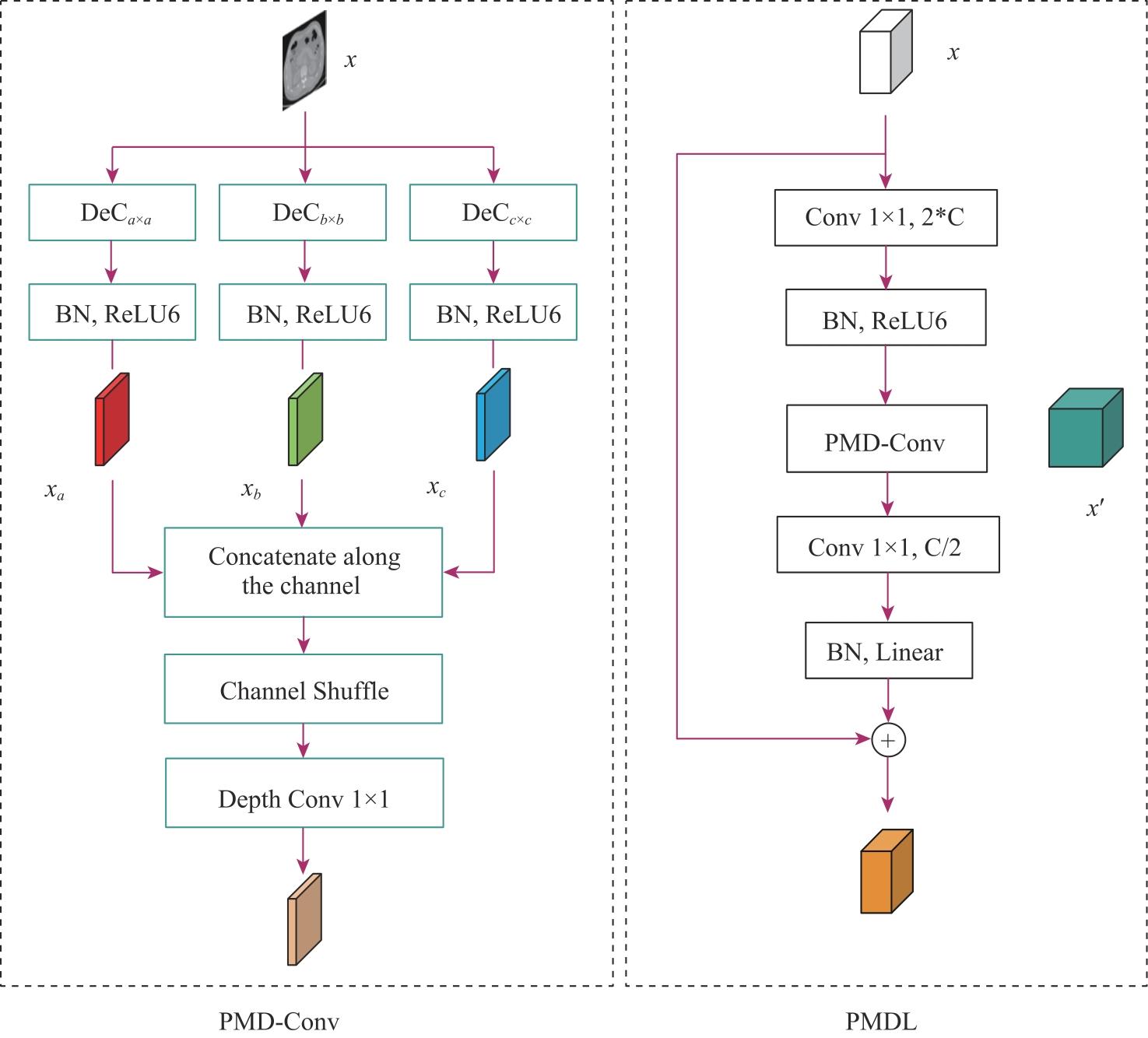
Fig.5
The parallel V-Mamba structure"
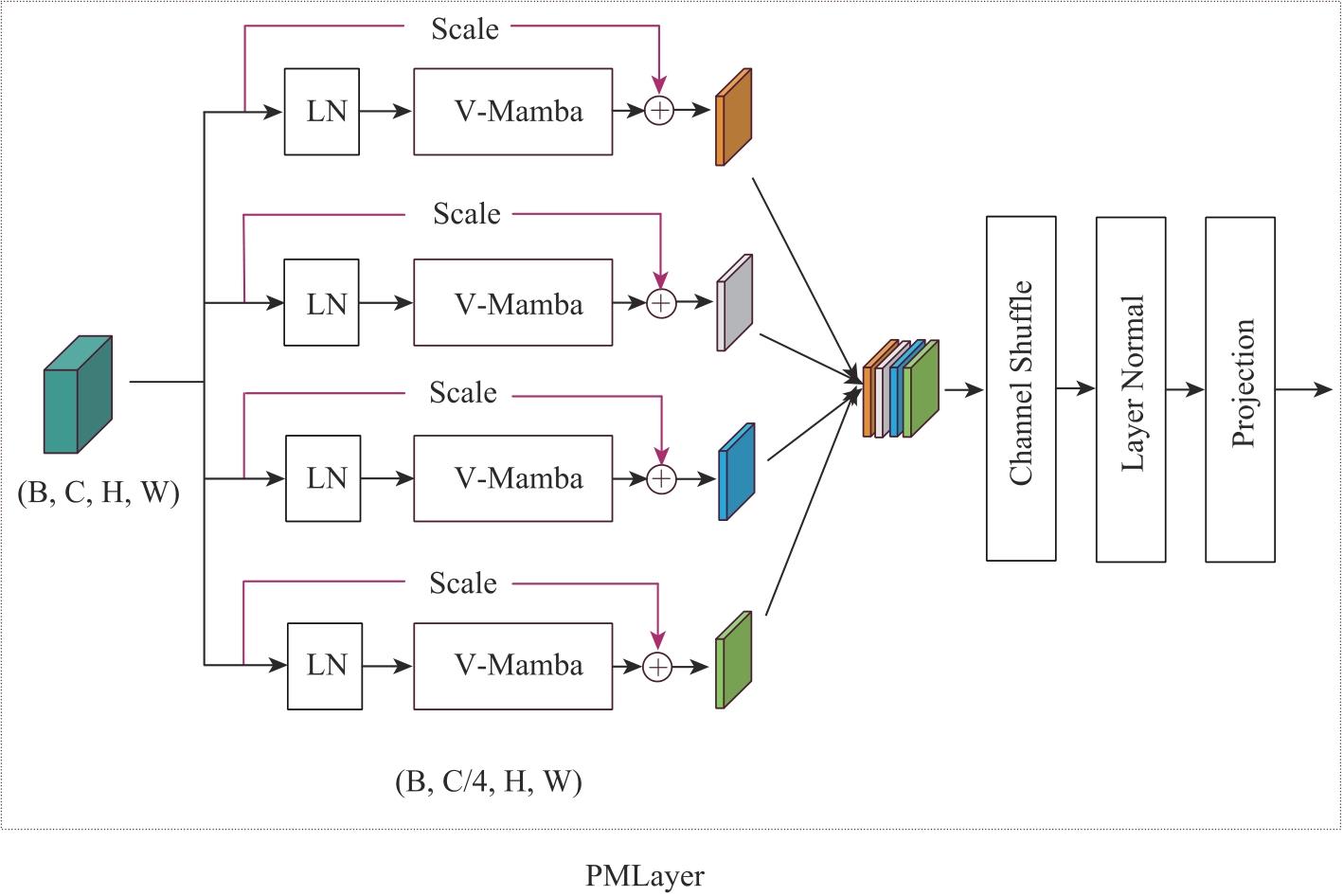
Fig.6
Large-kernel Attention Gate(left), SAB and CAB (right)"
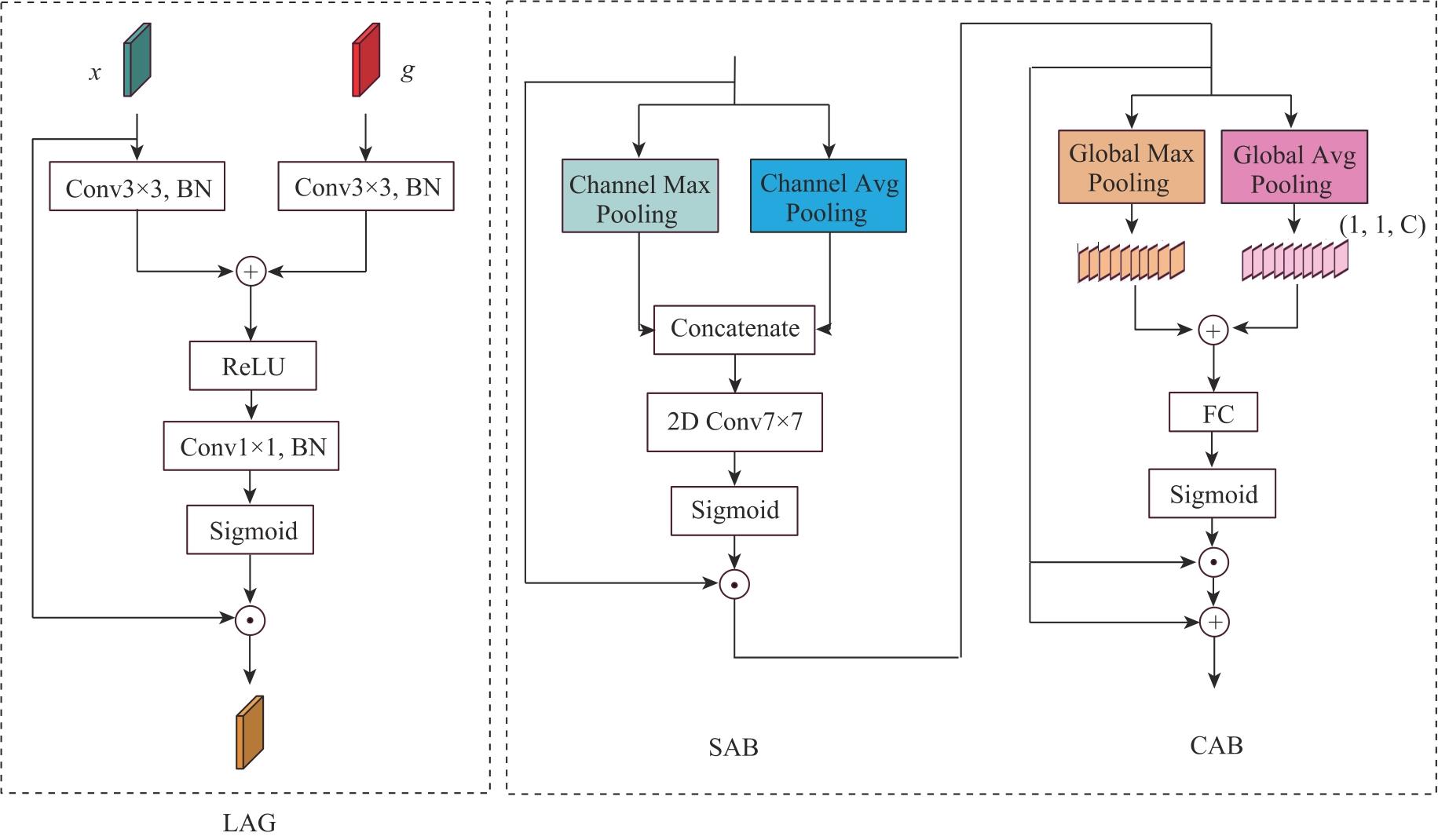
Table 9
Comparative analysis of weight selections for the combined loss value"
| Weight Combination | Dice | HD95 |
|---|---|---|
| ωi=1 ( | 81.65 | 10.92 |
| (ω1,??ω2,??ω3,ω4) = (4, 3, 2, 1), ωi=1 ( | 81.68 | 10.91 |
| (ω1,??ω2,??ω3,ω4) = (6, 3, 2, 1), ωi=1 ( | 81.68 | 10.91 |
| (ω1,??ω2,??ω3,ω4) = (1, 1, 1, 1), ωi=0.5 ( | 81.64 | 10.92 |
Table 1
Comparison of segmentation results of models on AMOS 2022 Abdominal CT datasets"
| Methods | Avg | Spleen | Kidney (R) | Kidney (L) | |
|---|---|---|---|---|---|
| Dice ↑ | HD95 ↓ | ||||
| nnUNet[ | 79.92 | 14.36 | 94.37 | 84.79 | 83.07 |
| TransUNet[ | 78.61 | 19.53 | 94.21 | 84.06 | 82.17 |
| SwinUNet[ | 80.21 | 15.91 | 94.69 | 85.50 | 84.61 |
| UMamba[ | 79.95 | 18.16 | 94.42 | 84.64 | 83.19 |
| MambaUNet[ | 79.45 | 18.85 | 94.39 | 84.13 | 82.97 |
| SwinUMamba[ | 80.98 | 14.75 | 94.65 | 85.56 | 84.78 |
| LightMUNet[ | 80.64 | 15.60 | 94.43 | 85.33 | 84.15 |
| MALUNet[ | 79.67 | 17.88 | 94.45 | 84.62 | 83.03 |
| PMDeUNet (ours) | 81.65 | 10.92 | 94.51 | 85.42 | 84.30 |
| Methods | Gall Bladder | Esophagus | Liver | Stomach | |
| nnUNet | 69.43 | 78.10 | 95.66 | 76.88 | |
| TransUNet | 67.50 | 76.45 | 95.33 | 74.59 | |
| SwinUNet | 68.05 | 78.85 | 95.64 | 77.24 | |
| UMamba | 68.12 | 78.80 | 95.57 | 77.08 | |
| MambaUNet | 68.09 | 78.07 | 95.38 | 76.94 | |
| SwinUMamba | 70.05 | 80.18 | 95.72 | 78.75 | |
| LightMUNet | 69.89 | 78.69 | 95.47 | 77.90 | |
| MALUNet | 68.03 | 78.66 | 95.50 | 76.97 | |
| PMDeUNet (ours) | 72.02 | 80.25 | 95.70 | 78.63 | |
| Methods | Aorta | Inferior Vena Cava | Pancreas | Adrenal Gland (R) | |
| nnUNet | 89.95 | 82.92 | 71.73 | 70.54 | |
| TransUNet | 88.90 | 81.53 | 70.04 | 69.23 | |
| SwinUNet | 90.70 | 82.87 | 72.02 | 70.35 | |
| UMamba | 89.92 | 82.75 | 72.88 | 70.16 | |
| MambaUNet | 89.55 | 82.29 | 71.16 | 69.93 | |
| SwinUMamba | 90.94 | 83.66 | 73.21 | 71.47 | |
| LightMUNet | 89.63 | 82.99 | 72.85 | 73.02 | |
| MALUNet | 89.02 | 82.25 | 71.92 | 71.14 | |
| PMDeUNet (ours) | 90.75 | 85.01 | 75.14 | 74.28 | |
| Methods | Adrenal Gland(L) | Duodenum | Bladder | Prostate/Uterus | |
| nnUNet | 68.92 | 68.60 | 87.46 | 76.30 | |
| TransUNet | 67.47 | 66.14 | 86.10 | 75.33 | |
| SwinUNet | 68.63 | 68.07 | 87.65 | 78.26 | |
| UMamba | 68.49 | 67.98 | 87.44 | 77.80 | |
| MambaUNet | 68.01 | 67.32 | 87.24 | 76.28 | |
| SwinUMamba | 69.54 | 68.87 | 88.76 | 78.65 | |
| LightMUNet | 70.15 | 69.33 | 88.03 | 77.72 | |
| MALUNet | 68.06 | 67.81 | 87.30 | 76.25 | |
| PMDeUNet (ours) | 71.09 | 70.97 | 88.16 | 78.60 | |
Table 2
Comparison of segmentation results of models on Synapse datasets"
| Methods | Avg | Aorta | Gallbladder | Kidney(L) | |
|---|---|---|---|---|---|
| Dice ↑ | HD95 ↓ | ||||
| TransUNet[ | 77.48 | 31.69 | 87.23 | 63.13 | 81.87 |
| SwinUNet[ | 79.13 | 21.55 | 85.47 | 66.53 | 83.28 |
| MobileUNETR[ | 79.53 | 20.85 | 86.93 | 66.98 | 83.80 |
| MISSFormer[ | 81.96 | 18.20 | 86.99 | 68.65 | 85.21 |
| MambaUNet[ | 78.95 | 24.90 | 85.36 | 66.40 | 83.26 |
| SwinUMamba[ | 79.28 | 20.90 | 85.95 | 66.02 | 83.62 |
| PMDeUNet (ours) | 81.33 | 18.16 | 86.03 | 70.80 | 83.66 |
| Methods | Kidney(R) | Liver | Pancreas | Spleen | Stomach |
| TransUNet | 77.02 | 94.08 | 55.86 | 85.08 | 75.62 |
| SwinUNet | 79.61 | 94.29 | 56.58 | 90.66 | 70.60 |
| MobileUNETR | 79.05 | 94.02 | 60.89 | 89.47 | 75.12 |
| MISSFormer | 82.00 | 94.41 | 65.67 | 91.92 | 80.81 |
| MambaUNet | 79.03 | 94.45 | 56.74 | 90.76 | 75.57 |
| SwinUMamba | 80.70 | 94.28 | 56.43 | 90.36 | 76.85 |
| PMDeUNet (ours) | 80.99 | 94.35 | 66.43 | 90.22 | 78.12 |
Table 3
Comparison of results of models on light-weight and inference"
| Methods | Params (M)↓ | GFLOPs ↓ | FPS ↑ |
|---|---|---|---|
| nnUNet[ | 34.530 | 36.224 | 30.6 |
| TransUNet[ | 93.231 | 32.304 | 46.9 |
| SwinUNet[ | 27.147 | 7.818 | 63.2 |
| MISSFormer[ | 35.453 | 9.502 | 43.2 |
| UMamba[ | 67.260 | 39.920 | 36.8 |
| MambaUNet[ | 11.920 | 4.421 | 57.8 |
| SwinUMamba[ | 22.620 | 15.126 | 50.1 |
| MobileUNETR[ | 3.105 | 1.620 | 58.7 |
| LightMUNet[ | 1.095 | 1.546 | 62.9 |
| MALUNet[ | 0.806 | 0.912 | 64.3 |
| PMDeUNet (ours) | 0.753 | 0.865 | 64.6 |
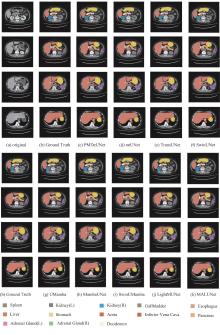
Fig.7
Visualization of model prediction results"
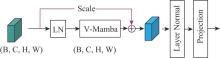
Fig.8
V-Mamba module with non-parallel structure"
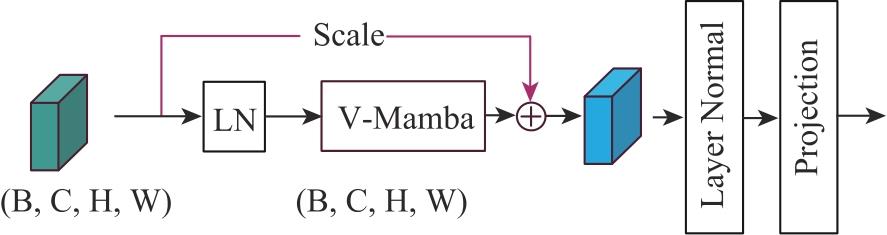
Table 4
Comparison of the effectiveness of parallel structure in V-Mamba"
| Parallelism | Dice | HD95 | Params | GFLOPs |
|---|---|---|---|---|
| No | 81.60 | 10.92 | 1.395M | 0.868 |
| Yes | 81.65 | 10.92 | 0.753M | 0.865 |
Table 5
Comparison of the effectiveness of PMD-Conv module"
| Model | Dice | HD95 |
|---|---|---|
| MDe-UNet | 80.18 | 16.36 |
| PMDe-UNet | 81.65 | 10.92 |
Table 6
Comparison of different combinations of convolutional kernels"
| Conv kernel Combination | [1,3] | [3,3] | [1,3,5] | [3,5,7] | [1,3,5,7] |
|---|---|---|---|---|---|
| Dice | 80.78 | 80.92 | 81.65 | 81.23 | 81.62 |
| HD95 | 12.15 | 12.63 | 10.92 | 10.98 | 10.92 |
Table 7
Comparison of the effectiveness of deformable convolution"
| Conv Module | Dice | HD95 |
|---|---|---|
| PM-Conv | 80.86 | 14.53 |
| PMD-Conv | 81.65 | 10.92 |
Table 8
Comparison of the effectiveness of large-kernel attention gate"
| Skip-Connection | Dice | HD95 |
|---|---|---|
| PMDeUNet* | 81.40 | 10.95 |
| PMDeUNet | 81.65 | 10.92 |
| [1] |
ZHENG R, SHI C, WANG C, et al. Imaging-Based Staging of Hepatic Fibrosis in Patients with Hepatitis B: A Dynamic Radiomics Model Based on Gd-EOB-DTPA-Enhanced MRI[J]. Biomolecules, 2021, 11(2): 307.
doi: 10.3390/biom11020307 |
| [2] |
REHMAN A, KHAN F, et al. A deep-learning based review on abdominal images[J]. Multimedia Tools and Applications, 2021, 80: 30321-30352.
doi: 10.1007/s11042-020-09592-0 |
| [3] |
KAUR H, KAUR N, NEERU N. Evolution of multiorgan segmentation techniques from traditional to deep learning in abdominal CT images-a systematic review[J]. Displays, 2022, 73: 102223.
doi: 10.1016/j.displa.2022.102223 |
| [4] | CAO H, WANG Y, Chen J, et al. Swin-UNet: Unet-like pure transformer for medical image segmentation[C]. Proceedings of the European Conference on Computer Vision Workshops, Cham, Springer, 2022, 205-208. |
| [5] | CHEN J, LU Y, YU Q, et al. Trans-UNet: Rethinking the U-Net architecture design for medical image segmentation through the lens of transformers[J]. Medical Image Analysis, 2024, 97: 103208. |
| [6] |
HUANG X, DENG Z, LI D, YUAN X. MISSFormer: An effective transformer for 2D medical image segmentation[J]. IEEE Transactions on Medical Imaging, 2023, 42(5): 1484-1494.
doi: 10.1109/TMI.2022.3230943 pmid: 37015444 |
| [7] | JUN M, LI F, WANG B. U-Mamba: Enhancing Long-range Dependency for Biomedical Image Segmentation[EB/OL]. 2024, https://arxiv.org/abs/2401.047-22. |
| [8] | LIU J, YANG H, ZHOU H Y, et al. Swin-UMamba: Mamba-based UNet with ImageNet-based pretraining[C]. International Conference on Medical Image Computing and Computer Assisted Intervention, Springer, Marrakesh, Morocco, 2024: 1627-1636. |
| [9] | WANG Z, ZHENG J, et al. Mamba-UNet: UNet-Like Pure Visual Mamba for Medical Image Segmentation[EB/OL]. 2024, https://arxiv.org/abs/2402.05079. |
| [10] | LIAO W, ZHU Y, WANG X, et al. LightM-UNet: Mamba Assists in Lightweight U-Net for Medical Image Segmentation[EB/OL]. 2024, https://arxiv.org/abs/2403.05246. |
| [11] |
WU R, LIU Y, NING G, et al. Ultra-Light VM-U-Net: Parallel Vision Mamba significantly reduces parameters for skin lesion segmentation[J]. Patterns, 2025, 6(11): 101298.
doi: 10.1016/j.patter.2025.101298 |
| [12] | MDMOSTAFIjUR R, MUSTAFA M, RADU M. EMCAD: efficient multi-scale convolutional attention decoding for medical image segmentation[C]. IEEE Conference on Computer Vision and Pattern Recognition, Seattle, WA, USA, 2024, 11769-11779. |
| [13] | ZHU X, HU H, LIN S, et al. Deformable Conv-Nets v2: More deformable, better results[C]. IEEE Conference on Computer Vision and Pattern Recognition, Long Beach, CA, USA, 2019, 9300-9308. |
| [14] | ZHANG X, ZHOU X, LIN M, et al. Shuffle-Net: An extremely efficient convolutional neural network for mobile devices[C]. IEEE Conference on Computer Vision and Pattern Recognition, Piscataway: IEEE, 2018, 6848-6856. |
| [15] | MARK S, ANDREW H, ZHU M, et al. MobileNetv2: Inverted residuals and linear bottlenecks[C]. IEEE Conference on Computer Vision and Pattern Recognition, Piscataway: IEEE, 2018, 4510-4520. |
| [16] | HU J, LI S, GANG S. Squeeze-and-Excitation Networks[C]. IEEE Conference on Computer Vision and Pattern Recognition, Piscataway: IEEE, 2018, 7132-7141. |
| [17] | RAHMAN M, MARCULESCU R. Multi-scale Hierarchical Vision Transformer with Cascaded Attention Decoding for Medical Image Segmentation[C]. Proceedings of the 41st International Conference on Machine Learning, 2024, 3456-3468. |
| [18] | JI Y, BAI H, YANG J, et al. AMOS:A Large-Scale Abdominal Multi-Organ Benchmark for Versatile Medical Image Segmentation[EB/OL]. 2022, https://arxiv.org/2206.08023. |
| [19] | LANDMAN B, XU Z, IGELSIAS J, et al. MICCAI multi-atlas labeling beyond the cranial vault-workshop and challenge. Proc. MICCAI Multi-Atlas Labeling Beyond Cranial Vault-Workshop Challenge[M]. 2015: 5, 12. |
| [20] |
ISENSEE F, PETERSEN J, KOHL S A, et al. nnU-Net: a self-configuring method for deep learning based biomedical image segmentation[J]. Nat Methods, 2021, 18: 203-211.
doi: 10.1038/s41592-020-01008-z |
| [21] | PERERA S, ERZURUMLU Y, GULATI D, et al. MobileUNETR: A Lightweight End-To-End Hybrid Vision Transformer for Efficient Medical Image Segmentation[C]. Proceedings of the European Conference on Computer Vision Workshops, Springer, 2024, 281-299. |
| [22] | RUAN J, XIANG S, XIE M, et al. MALUNet: a multi-attention and light-weight unet for skin lesion segmentation[C]. IEEE Conference on Bioinformatics and Biomedicine (BIBM), Piscataway: IEEE, 2022, 1150-1156. |
| [1] | ZHANG Zihao, ZHANG Xiaorui, SUN Wei, ZHOU Shiyu. A Multi-Scale Temporal Difference Network for Depression Level Assessment from Facial Video [J]. Frontiers of Data and Computing, 2026, 8(4): 149-161. |
| [2] | ZHANG Siyang, HU Lin. Fusing Label Semantics for Hierarchical Multi-Label Classification of Agricultural Science Data [J]. Frontiers of Data and Computing, 2026, 8(4): 246-256. |
| [3] | ZHOU Yuming, ZHANG Yiming, LIU Yuanyuan, HUANG Shan. A Review of the Research on Remote Sensing Satellite Image Ship Detection Sample Dataset [J]. Frontiers of Data and Computing, 2026, 8(2): 215-226. |
| [4] | WANG Zhaobin, WANG Rui, LYU Yongke, ZHANG Yaonan. Desert Segmentation Based on Adaptive Semantic Connectivity and Perceptual Attention [J]. Frontiers of Data and Computing, 2026, 8(2): 25-39. |
| [5] | HAN Liqin, LI Longyuan, WANG Yukang, ZHANG Yaonan, CHANG Mengmeng, PAN Qingyuan. Research on the Construction of Semantic Segmentation Network for Post-Mudslide Remote Sensing Images Based on Frequency Domain Guided Features [J]. Frontiers of Data and Computing, 2026, 8(2): 54-65. |
| [6] | PAN Yuquan,YUAN Deyu,JIA Yuan,WANG Anran. VGAT-VGAN Across Social Networks User Identity Linkage Algorithm Based on Fusion Features [J]. Frontiers of Data and Computing, 2026, 8(1): 103-118. |
| [7] | CAI Yi,WANG Xiaobin,CHEN Ruili,HAN Xun. Review of Research on Gender and Age Detection of Writers Based on Handwriting [J]. Frontiers of Data and Computing, 2026, 8(1): 129-147. |
| [8] | WAN Meng, HE Honglin, REN Xiaoli, NIE Ningming, CAO Rongqiang, WANG Zongguo, LI Kai, WANG Xiaoguang, WANG Yangang, WANG Jue, GAO Chao. The Real-Time Assimilation and Prediction System for Terrestrial Ecosystem Carbon Cycling Based on Workflow [J]. Frontiers of Data and Computing, 2026, 8(1): 168-182. |
| [9] | DENG Yiru,HE Hongbo,WANG Ying,WANG Runqiang. Network Public Opinion Tendency Detection Method Based on Sentiment Analysis [J]. Frontiers of Data and Computing, 2026, 8(1): 91-102. |
| [10] | YANG Qinmeng, NIE Ningming, ZHOU Chunbao, WANG Yangang. Algorithm for Taylor Bar Collision Data Simulation Based on Deep Learning [J]. Frontiers of Data and Computing, 2025, 7(6): 101-110. |
| [11] | ZHOU Faguo, LIU Fang, WANG Yangang, WANG Jue, YU Miao, LI Shunde, ZHOU Chunbao, WANG Jing, YANG Qinmeng. Porting and Adapting Deep Learning Framework Operators on Domestic Supercomputers [J]. Frontiers of Data and Computing, 2025, 7(6): 136-148. |
| [12] | RUAN Min, WANG Lin, ZHANG Aixia, WANG Wanglong. An Study on Integration of Lightweight Multimodal Distillation and Trusted Traceability for Ingredient Recognition in Smart Supply Chain [J]. Frontiers of Data and Computing, 2025, 7(6): 179-190. |
| [13] | LINGHU Rongwei, ZHANG Yu, SHI Yuanquan, YANG Yujun. Multi-Feature Fusion-Based Detection and Classification of Portable Executable Malware [J]. Frontiers of Data and Computing, 2025, 7(6): 77-91. |
| [14] | XIN Yuhang,WANG Qiyi,SUN Jing,ZHAO Chunyan,LIU Yujia,LIANG Xue,CHEN Jie. Application of Radar Echo Extrapolation Based Model TrajCast on Domestic Accelerators for Short-Term and Imminent Precipitation Forecasting [J]. Frontiers of Data and Computing, 2025, 7(5): 113-122. |
| [15] | WANG Peng,YANG Xiaofeng,HE Zhongchen,DU Jun. Multispectral Remote Sensing Image Pansharpening Method Based on Shallow-Deep Convolutional Recurrent Neural Network [J]. Frontiers of Data and Computing, 2025, 7(5): 138-152. |
| Viewed | ||||||
|
Full text |
|
|||||
|
Abstract |
|
|||||

