Frontiers of Data and Computing ›› 2026, Vol. 8 ›› Issue (4): 179-190.
CSTR: 32002.14.jfdc.CN10-1649/TP.2026.04.013
doi: 10.11871/jfdc.issn.2096-742X.2026.04.013
Previous Articles Next Articles
WANG Xiaoguang1( ),CAO Rongqiang1,*(),WAN Meng1,LI Kai1,WANG Yangang1,2,WANG Jue1,2
Received:2025-08-23
Online:2026-08-20
Published:2026-08-21
WANG Xiaoguang, CAO Rongqiang, WAN Meng, LI Kai, WANG Yangang, WANG Jue. FaaS-Enabled Computing for Bioinformatics: a Comprehensive Review[J]. Frontiers of Data and Computing, 2026, 8(4): 179-190, https://cstr.cn/32002.14.jfdc.CN10-1649/TP.2026.04.013.
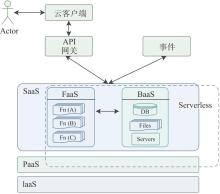
Fig.1
FaaS in the serverless computing architecture"
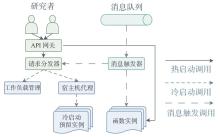
Fig.2
Invocation modes for function instances"
Table 1
Representative FaaS platforms"
| 平台名称 | 隔离运行时 | 资源类型 | 商业 | 开源 |
|---|---|---|---|---|
| AWS Lambda[ | 微虚拟机[ | AW;Batch:HPC [ | ☑ | ☒ |
| Google Cloud Functions[ | gVisor[ | GCP;Cloud HPC;HPC[ | ☑ | ☒ |
| Microsoft Azure Functions[ | 容器(Docker) | Azure | ☑ | ☒ |
| IBM Cloud Functions[ | 容器(Docker) | IBM Cloud;本地(OpenWhisk) | ☑ | ☒ |
| 阿里云函数计算[ | 容器(Docker) | 阿里云 | ☑ | ☒ |
| Oracle Cloud Functions[ | 容器(Docker) | Oracle Cloud | ☑ | ☒ |
| Cloudflare Workers[ | V8 Isolates[ | 边缘(Cloudflare) | ☑ | ☒ |
| 腾讯云函数[ | 容器(Docker) | 腾讯云 | ☑ | ☒ |
| 百度函数计算[ | 容器(Docker) | 百度云 | ☑ | ☒ |
| Apache OpenWhisk[ | 容器(Docker) | 云、本地(Kubernetes,Docker) | ☒ | ☑ |
| Knative[ | 容器(Kubernetes) | 云、本地(Kubernetes) | ☒ | ☑ |
| OpenFaaS[ | 容器(Docker) | 云、本地(Kubernetes,Docker Swarm) | ☒ | ☑ |
| SAND[ | 容器(Docker) | 云 | ☒ | ☑ |
| Fission[ | 容器(Kubernetes) | 云、本地(Kubernetes) | ☒ | ☑ |
| Kubeless[ | 容器(Kubernetes) | 云、本地(Kubernetes) | ☒ | ☑ |
| Nuclio[ | 容器(Docker) | 云、本地(Kubernetes),边缘 | ☒ | ☑ |
| Riff[ | 容器(Kubernetes) | 云、本地(Kubernetes) | ☒ | ☑ |
| IronFunctions[ | 容器(Docker) | 云、本地(Docker) | ☒ | ☑ |
| FnProject[ | 容器(Docker) | 云、本地(Docker) | ☒ | ☑ |
| funcX [ | 容器(Docker) | 云、HPC 资源 | ☒ | ☑ |
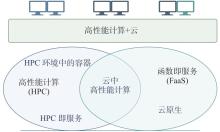
Fig.3
Three modes of FaaS-HPC integration"
Fig.4
Process flow of FaaS-HPC integration"
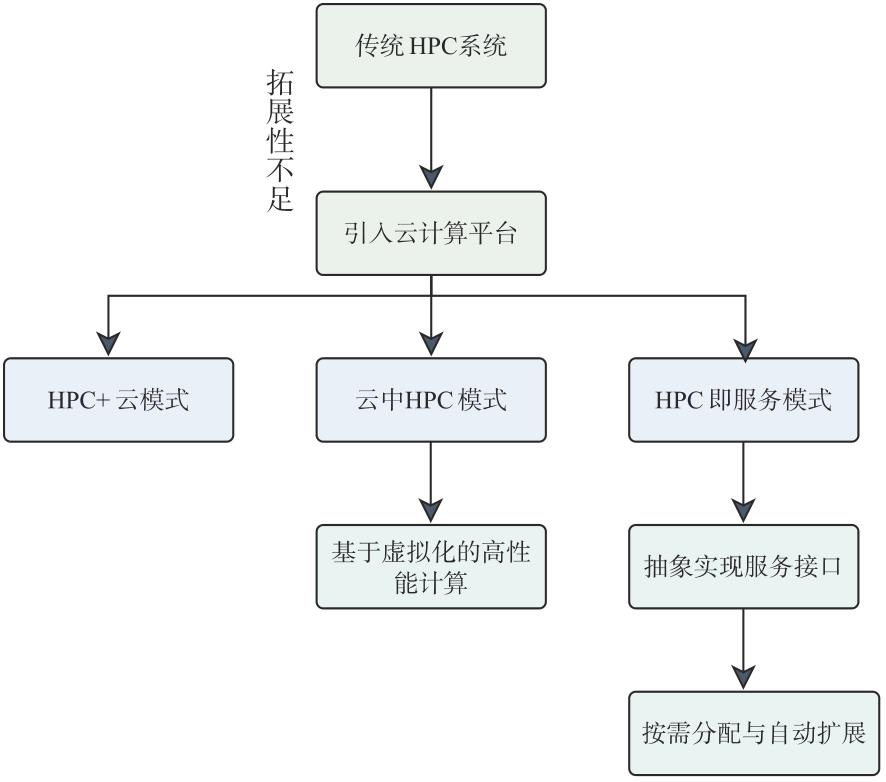
Table 2
Summary table of three integration models"
| 关键指标 | HPC+云模式(funcX)[ | 云中HPC模式(公有云FaaS AWS) | HPC即服务模式(rFaaS)[ |
|---|---|---|---|
| 资源利用率 | 通过按需供给与弹性伸缩,funcX 减少空闲造成的浪费,满足计算需求。 | 通过“装箱式”实例放置把同一宿主机内存压实利用、降低空闲浪费。 | rFaaS 用“租约+预热沙箱”把短时空闲的 CPU/内存转化为可用执行位,提高整体利用率。 |
| 扩展性 | 在 HPC 集群上,funcX 代理可把单函数扩展到十万级别的并发容器,并保持良好的强/弱扩展。 | 按请求横向拉起执行环境,第三方测量显示在主流平台中扩展性表现最佳。 | 横向扩展由 RDMA 网络规模决定,资源管理器可多副本并以轮询处理租约请求,客户端并行直连多线程执行。 |
| 执行延迟 | 单次调用延迟与公有云 FaaS 同量级。 | 冷启动受语言/内存影响显著 | 热路径相对原生 RDMA仅增加亚微秒级调用开销,暖调用往返为数微秒量级。 |
| 资源隔离 | 通过容器运行函数并结合认证链路,funcX 将函数与外部数据/设备隔离 | 依赖云平台隔离机制,以虚拟化方式为容器/函数提供强隔离。 | 函数运行在“隔离执行沙箱”中,容器侧配合 SR-IOV 虚拟函数提供接近原生的 RDMA 网络能力与多租隔离。 |
| 状态管理 | 遵循无共享状态的函数式调用,数据以序列化参数/外部数据通道传递。 | 函数被设计成无共享状态,持久/共享状态应存放在外部服务,依靠云存储服务。 | 遵循无状态函数模型,同时复用“暖状态”(缓存/连接等)以支撑迭代式高性能调用。 |
| 任务调度 | 采用“服务—端点—工作进程”的分层队列保障可靠投递,并由代理用随机化算法把任务分配到有容量的管理器/容器上。 | 调度策略以“每请求→一实例”的并发映射为主。 | 采用去中心化“租约(lease)”机制,控制面仅参与冷启动,暖/热调用绕过网关与消息总线由客户端直连执行器。 |
| 结构特性 | 本地+云分流能减少本地HPC资源峰值压力,提高利用率/数据交互复杂、技术门槛高 | 云端HPC+FaaS可以实现弹性最大/成本高 | 统一API/平台一站式调用/受限于API能力 |
| [1] | BERGERON B P. Bioinformatics computing[M]. Prentice Hall Professional, 2003: 1-2. |
| [2] |
SCHADT E E, LINDERMAN M D, SORENSON J, et al. Computational solutions to large-scale data management and analysis[J]. Nature Reviews Genetics, 2010, 11(9): 647-657.
doi: 10.1038/nrg2857 pmid: 20717155 |
| [3] | JIN H. Chinagrid: Making grid computing a reality[J]. Digital Libraries:International Collaboration and Cross-Fertilization, 2005, 3815: 13-24.. |
| [4] | JOHN N, SHENOY S. Health cloud-healthcare as a service (haas)[C]// 2014 International Conference on Advances in Computing, Communications and Informatics (ICACCI), IEEE, 2014: 1963-1966. |
| [5] |
KAUR P D, CHANA I. Cloud based intelligent system for delivering health care as a service[J]. Computer methods and programs in biomedicine, 2014, 113(1): 346-359.
doi: 10.1016/j.cmpb.2013.09.013 pmid: 24139021 |
| [6] | LYNN T, ROSATI P, LEJEUNE A, et al. A preliminary review of enterprise serverless cloud computing (function-as-a-service) platforms[C/OL]// 2017 IEEE International Conference on Cloud Computing Technology and Science (CloudCom), 2017: 162-169. DOI:10.1109/CloudCom.2017.15. |
| [7] |
BANIMFREG B H. A comprehensive review and conceptual framework for cloud computing adoption in bioinformatics[J]. Healthcare Analytics, 2023, 3: 100190.
doi: 10.1016/j.health.2023.100190 |
| [8] | JANGDA A, PINCKNEY D, BRUN Y, et al. Formal foundations of serverless computing[J]. Proceedings of the ACM on Programming Languages, 2019, 3(OOPSLA): 1-26. |
| [9] |
MALLA S, CHRISTENSEN K. Hpc in the cloud: Performance comparison of function as a service (faas) vs infrastructure as a service (iaas)[J]. Internet Technology Letters, 2020, 3(1): e137.
doi: 10.1002/itl2.v3.1 |
| [10] | VAHIDINIA P, FARAHANI B, ALIEE F S. Cold start in serverless computing: Current trends and mitigation strategies[C]// 2020 International Conference on Omni-layer Intelligent Systems(COINS), IEEE, 2020: 1-7. |
| [11] | ARJONA A, GABRIEL-ATIENZA A, LANUZA-ORNA S, et al. Scaling a variant calling genomics pipeline with faas [C/OL]// WoSC’23: Proceedings of the 9th International Work shop on Serverless Computing, New York, NY, USA: Association for Computing Machinery, 2023:59-64. https://doi.org/10.1145/3631295.3631403. |
| [12] |
KRAMPIS K, BOOTH T, CHAPMAN B, et al. Cloud biolinux: preconfigured and on-demand bioinformatics computing for the genomics community[J]. BMC bioinformatics, 2012, 13: 1-8.
doi: 10.1186/1471-2105-13-1 |
| [13] |
Malcolm M, Aaron G, et al. CloVR: a virtual machine for automated and portable sequence analysis from the desktop using cloud computing[J]. BMC bioinformatics, 2011, 12(1): 356.
doi: 10.1186/1471-2105-12-356 |
| [14] |
AFGAN E, BAKER D, VAN DENBEEK M, et al. The galaxy platform for accessible, reproducible and collaborative biomedical analyses: 2016 update[J]. Nucleic acids research, 2016, 44(W1): W3-W10.
doi: 10.1093/nar/gkw343 |
| [15] | LIN D, XIN G, YAN G, et al. Bioinformatics clouds for big data manipulation[J]. Biology Direct, 2012, 7(1): 43; discussion 43.. |
| [16] | ANDI H K. Analysis of serverless computing techniques in cloud software framework[J]. Journal of IoT in Social, Mobile, Analytics, and Cloud, 2021, 3(3): 221-234. |
| [17] | AWS. AWS re: Invent 2014 Recap[EB/OL]. https://aws.amazon.com/cn/blogs/developer/aws-reinvent-2014-recap-2/. |
| [18] | LEE H, SATYAM K, FOX G. Evaluation of production serverless computting environments[C/OL]// 2018 IEEE 11th International Conference on Cloud Computing (CLOUD), 2018: 442-450. DOI:10.1109/CLOUD.2018.00062. |
| [19] | LAMBDA A. AWS Lambda execution context[EB/OL]. https://docs.aws.amazon.com/lambda/latest/dg/lambda-runtime-environment.html. |
| [20] | AGACHE A, BROOKER M, IORDACHE A, et al. Firecracker: Lightweight virtualization for serverless applications[C]// 17th USENIX symposium on networked systems design and implementation(NSDI20), 2020: 419-434. |
| [21] | AWS. Aws batch hpc[EB/OL]. https://aws.amazon.com/solutions/case-studies/quantitative-biology-center/. |
| [22] | AWS. Aws batch iot[EB/OL]. https://aws.amazon.com/greengrass/. |
| [23] | GOOGLE. Google Cloud Functions[EB/OL]. https://cloud.google.com/functions. |
| [24] | GOOGLE. gvisor[EB/OL]. https://cloud.google.com/blog/products/containers-kubernetes/gvisor-file-system-improvements-for-gke-and-serverless. |
| [25] | GOOGLE. Google hpc[EB/OL]. https://cloud.google.com/solutions/hpc?hl=en. |
| [26] | MICROSOFT. Azure Functions[EB/OL]. https://azure.microsoft.com/en-us/products/functions/. |
| [27] | IBM. IBM Cloud Functions[EB/OL]. https://www.ibm.com/products/functions. |
| [28] | ALIBABACLOUD. Alibaba cloud Function Compute[EB/OL]. https://www.alibabacloud.com/en/product/function-compute?_p_lc=1. |
| [29] | ORACLE. Oracle Cloud Functions[EB/OL]. https://www.oracle.com/cloud/cloud-native/functions/. |
| [30] | CLOUDFLARE. Cloudflare Workers[EB/OL]. https://developers.cloudflare.com/workers/. |
| [31] | SCHWARZL M, BORRELLO P, KOGLER A, et al. Dynamic process isolation[J]. arXiv preprint arXiv: 2110.0475 1, 2021. |
| [32] | TENCENT. Tencent Serverless Cloud Function[EB/OL]. https://www.tencentcloud.com/products/scf. |
| [33] | BAIDU. Baidu Cloud Function Compute[EB/OL]. https://intl.cloud.baidu.com/. |
| [34] | APACHE. OpenWhick[EB/OL]. https://openwhisk.apache.org/. |
| [35] | KNATIVE. Knative[EB/OL]. https://knative.dev/docs/. |
| [36] | OPENFAAS. Openfaas[EB/OL]. https://www.openfaas.com/. |
| [37] | AKKUS I E, CHEN R, RIMAC I, et al. SAND: Towards High Performance serverless computing[C/OL]// 2018 USENIX Annual Technical Conference (USENIX ATC 18), Boston, MA: USENIX Association, 2018: 923-935. https://www.usenix.org/conference/atc18/presentation/akkus. |
| [38] | OPEN SOURCE. Open source Kubernetes-native Serverless Framework[EB/OL]. https://fission.io/. |
| [39] | VMWARE. Kubernetes Native Serverless Framework[EB/OL]. https://github.com/vmware-archive/kubeless. |
| [40] | OPEN SOURCE. Automate the Data Science Pipeline with Serverless Functions[EB/OL]. https://nuclio.io/. |
| [41] | OPEN SOURCE. riff[EB/OL]. https://projectriff.io/. |
| [42] | OPEN SOURCE. IronFunctions[EB/OL]. https://open.iron.io/. |
| [43] | OPEN SOURCE. fn project[EB/OL]. https://fnproject.io/. |
| [44] | FUNCX. Funcx[EB/OL]. https://funcx.org/. |
| [45] | JIA Z, WITCHEL E. Nightcore: efficient and scalable serverless computing for latency-sensitive, interactive microservices[C/OL]//ASPLOS’21:Proceedings of the 26th ACM International Conference on Architectural Support for Programming Languages and Operating Systems. New York, NY, USA: Association for Computing Machinery, 2021: 152-166.https://doi.org/10.1145/3445814.3446701. |
| [46] | SHILLAKER S, PIETZUCH P. Faasm: Lightweight isolation for efficient stateful serverless computing[C/OL] // 2020 USENIX Annual Technical Conference(USENIX ATC 20). USENIX Association, 2020:419-433. https://www.usenix.org/conference/atc20/presentation/shillaker. |
| [47] | BARCELONA-PONS D, SUTRA P, SáNCHEZ-ARTIG AS M, et al. Stateful serverless computing with crucial[J/OL]. ACM Trans. Softw. Eng. Methodol. 2022, 31(3). https://doi.org/10.1145/3490386. |
| [48] | KLIMOVIC A, WANG Y, STUEDI P, et al. Pocket: elastic ephemeral storage for serverless analytics[C]// 13th USENIX Symposium on Operating Systems Design and Implementation (OSDI 18), USENIX Association, 2018: 427-444. |
| [49] | SINGHVI A, HOUCK K, BALASUBRAMANIAN A, et al. Archipelago: A scalable low-latency serverless platform[J/OL]. CoRR, 2019, abs/1911.09849. http://arxiv.org/abs/1911.09849. |
| [50] | SREEKANTI V, WU C, LIN X C, et al. Cloudburst: Stateful functions as-a-service[J/OL]. CoRR, 2020, abs/2001.04592. https://arxiv.org/abs/2001.04592. |
| [51] | Barcelona-Pons M, García-López P. Scaling a variant calling genomics pipeline with FaaS[J]. arXiv preprint arXiv:2312.07090, 2023. |
| [52] |
Malla S, Christensen K. HPC in the cloud: Performance comparison of function as a service (FaaS) vs infrastructure as a service (IaaS)[J]. Internet Technology Letters, 2019, 3(1): e137. https://doi.org/10.1002/itl2.137.
doi: 10.1002/itl2.v3.1 |
| [53] | Kumanov A, Lloyd W. Leveraging serverless computing to improve performance for bioinformatic research[C]// Proceedings of the 10th ACM International Conference on Bioinformatics, Computational Biology and Health Informatics, 2019: 628-636. |
| [54] | HUNG L H, NIU X, LLOYD W, et al. Accessible and interactive rna sequencing analysis using serverless computing[M/OL]. Cold Spring Harbor Laboratory, 2019. http://dx.doi.org/10.1101/576199. |
| [55] |
VIVIAN J, RAO A A, NOTHAFT F A, et al. Toil enables reproducible, open source, big biomedical data analyses[J]. Nature biotechnology, 2017, 35(4):314-316.
doi: 10.1038/nbt.3772 pmid: 28398314 |
| [56] |
LEE B D, TIMONY M A, RUIZ P. Dnavisualization.org: a serverless web tool for dna sequence visualization[J]. Nucleic acids research, 2019, 47(W1): W20-W25.
doi: 10.1093/nar/gkz404 |
| [57] | CRESPO-CEPEDA R, AGAPITO G, VAZQUEZ-POLETTI J L, et al. Challenges and opportunities of amazon serverless lambda services in bioinformatics[C/OL]// BCB’19: Proceedings of the10th ACM International Conference on Bioinformatics, Computational Biology and Health Informatics. New York, NY, USA: Association for Computing Machinery, 2019:663-668. https://doi.org/10.1145/3307339.3343462. |
| [58] | NIU X, KUMANOV D, HUNGL H, et al. Leveraging serverless computing to improve performance for sequence comparison[C]// Proceedings of the10th ACM international conference on bioinformatics, computational biology and health informatics, 2019:683-687. |
| [59] | LLOYD W, RAMESH S, CHINTHALAPATI S, et al. Serverless computing: An investigation of factors influencing microservice performance[C]// 2018 IEEE international conference on cloud engineering (IC2E), IEEE, 2018:159-169. |
| [60] | KUMARI A, BEHERAR K, SAHOO B, et al. Role of serverless computing in healthcare systems: Case studies[C]// International Conference on Computational Science and Its Applications, Springer, 2022:123-134. |
| [61] |
SHANAHAN H P, OWEN A M, HARRISON A P. Bioinformatics on the cloud computing platform azure[J]. PloS one, 2014, 9(7): e102642.
doi: 10.1371/journal.pone.0102642 |
| [62] |
NAVALE V, BOURNE P E. Cloud computing applications for biomedical science: A perspective[J]. PLoS computational biology, 2018, 14(6): e1006144.
doi: 10.1371/journal.pcbi.1006144 |
| [63] | SHAKIL K A, ALAM M. Cloud computing in bioinformatics and big data analytics: Current status and future research[C]// Big Data Analytics:Proceedings of CSI 2015, Springer, 2018: 629-640. |
| [64] | CHARD R, BABUJI Y, LI Z, et al. Funcx: A federated function serving fabric for science[C]// Proceedings of the 29th International symposium on high-performance parallel and distributed computing, 2020:65-76. |
| [65] | CARVER B, ZHANG J, WANG A, et al. Wukong: A scalable and locality enhanced framework for serverless parallel computing[C]// Proceedings of the 11th ACM symposium on cloud computing, 2020: 1-15. |
| [66] | COPIK M, TARANOV K, CALOTOIU A, et al. rfaas: Rdma-enabled faas platform for serverless high- performance computing[J]. arXiv preprint arXiv: 2106. 13859, 2021. |
| [67] | PRZYBYLSKI B, PAWLIK M, ŻUK P, et al. Using unused: non-invasive dynamic faas infrastructure with hpc-whisk[C]// SC22:International Conference for High Performance Computing, Networking, Storage and Analysis, IEEE, 2022: 1-15. |
| [68] | SPILLNER J, MATEOS C, MONGED A. Faaster, better, cheaper: The prospect of serverless scientific computing and hpc[C]// High Performance Computing:4th Latin American Conference, CARLA 2017, Buenos Aires, Argentina, and Colonia del Sacramento, Uruguay, September 20-22, 2017, Revised Selected Papers 4, Springer, 2018: 154-168. |
| [69] | ABDELBAKY M, PARASHAR M, KIM H, et al. Enabling high performance computing as a service[J]. Computer, 2012, 45(10): 72-80. |
| [70] | BALDINI I, CASTRO P, CHANG K, et al. Serverless computing: Current trends and open problems[M/OL]. Singapore: SpringerSingapore, 2017: 1-20. https://doi.org/10.1007/978-981-10-5026-8_1. |
| [71] | MüLLER I, MARROQUÍN R, ALONSO G. Lambada: Interactive data analytics on cold data using serverless cloud infrastructure[C/OL]//SIGMOD ’20: Proceedings of the 2020 ACM SIGMOD International Conference on Management of Data, New York, N Y, USA: Association for Computing Machinery, 2020:115-130. https://doi.org/10.1145/3318464.3389758. |
| [72] | WANG L, LI M Y, ZHANG Y Q, et al. Peeking behind the curtains of serverless platforms[C]// Proceedings of the 2018 USENIX Conference on Usenix Annual Technical Conference (USENIX ATC’18) USENIX Association, USA, 2018:133-145. |
| [1] | JI Peng,NIU Tie,WEI Ting,PENG Liang. Research on Supercomputer Job Running State Prediction Based on XGBoost Model [J]. Frontiers of Data and Computing, 2024, 6(6): 123-129. |
| [2] | ZHAO Yining, XIAO Haili. A Monitoring and Diagnosis System for CNGrid [J]. Frontiers of Data and Computing, 2024, 6(1): 57-67. |
| [3] | WEI Ting, PENG Liang, NIU Tie, ZHANG Honghai. Detection and Root Cause Analysis of HPC Failure Jobs Based on Feature Analysis [J]. Frontiers of Data and Computing, 2023, 5(6): 94-103. |
| [4] | PENG Liang, NIU Tie, WEI Baoliang, ZHAO Yi. The Design and Implementation of a Monitoring System for Super-Large Computing Cluster [J]. Frontiers of Data and Computing, 2023, 5(1): 97-103. |
| [5] | LI Yue,YANG Bo,LU Xuyi,SHAN Guihua. A Visual Analysis System for SWF Log Event Stream Data [J]. Frontiers of Data and Computing, 2021, 3(4): 3-17. |
| [6] | YANG Rufeng. Analysis of High Performance Computing Capability Construction in Aviation Manufacturing Industry and Research on the Integrated Construction Method [J]. Frontiers of Data and Computing, 2021, 3(1): 88-97. |
| Viewed | ||||||
|
Full text |
|
|||||
|
Abstract |
|
|||||

