Frontiers of Data and Computing ›› 2026, Vol. 8 ›› Issue (3): 59-67.

doi: 10.11871/jfdc.issn.2096-742X.2026.03.006

• Special Issue: Call for Papers for the 21st National Conference on Scientific Computing • Previous Articles     Next Articles

Design and Implementation of Universal Astronomical Data File Template Framework

LI Shiyuan1,2(),HOU Shujin1,MA Xiang2,HUANG Yue2,ZHENG Shijie2,GE Mingyu2,WANG Shuang2,*()   

  1. 1 Nanyang Normal University, Nanyang, Henan 473061, China
    2 Institute of High Energy Physics, Chinese Academy of Sciences, Beijing 100049, China
  • Received:2025-11-24 Online:2026-06-20 Published:2026-06-18
  • Contact: WANG Shuang E-mail:lishiyuan@ihep.ac.cn;wangshuang@ihep.ac.cn

Abstract:

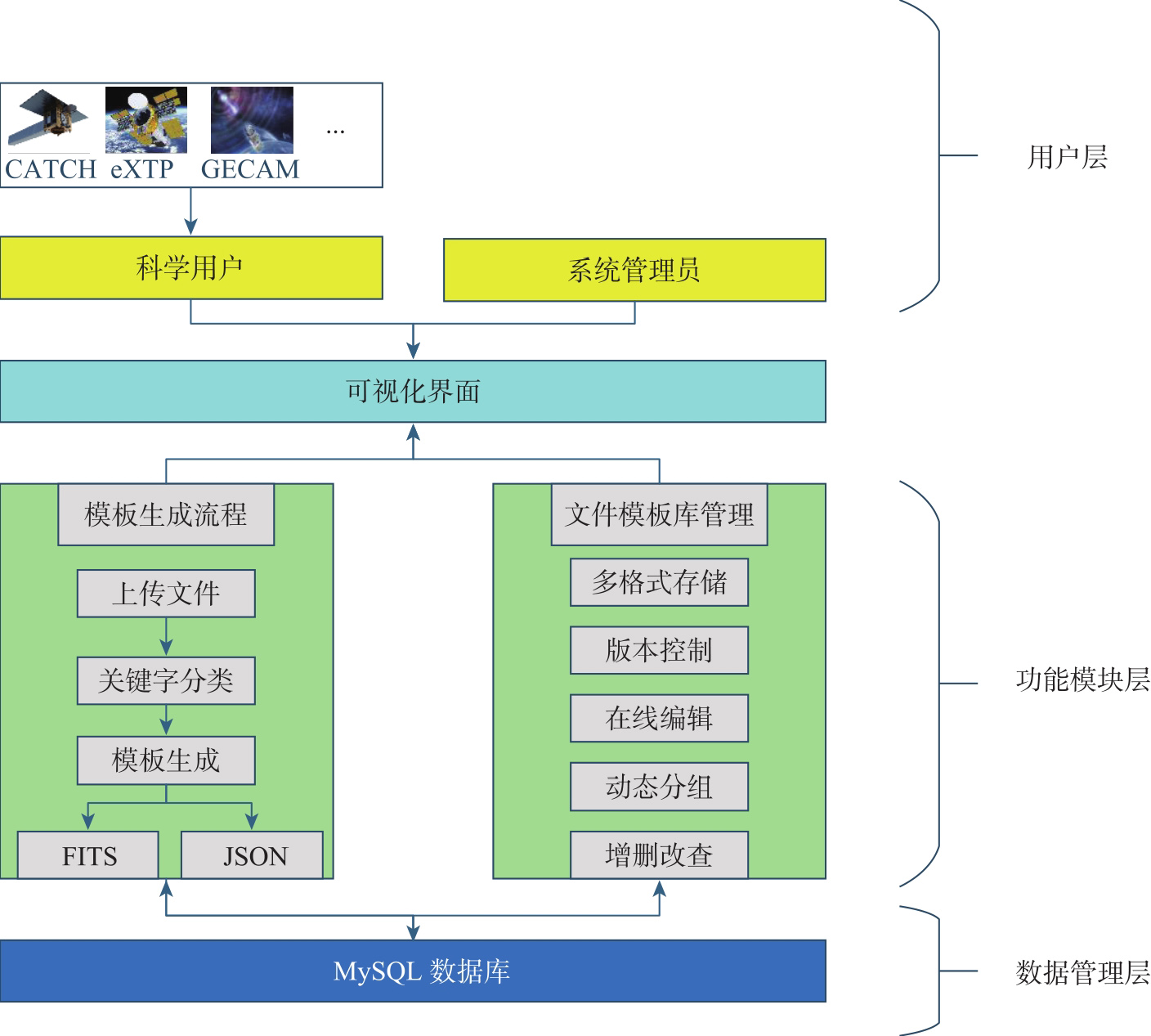
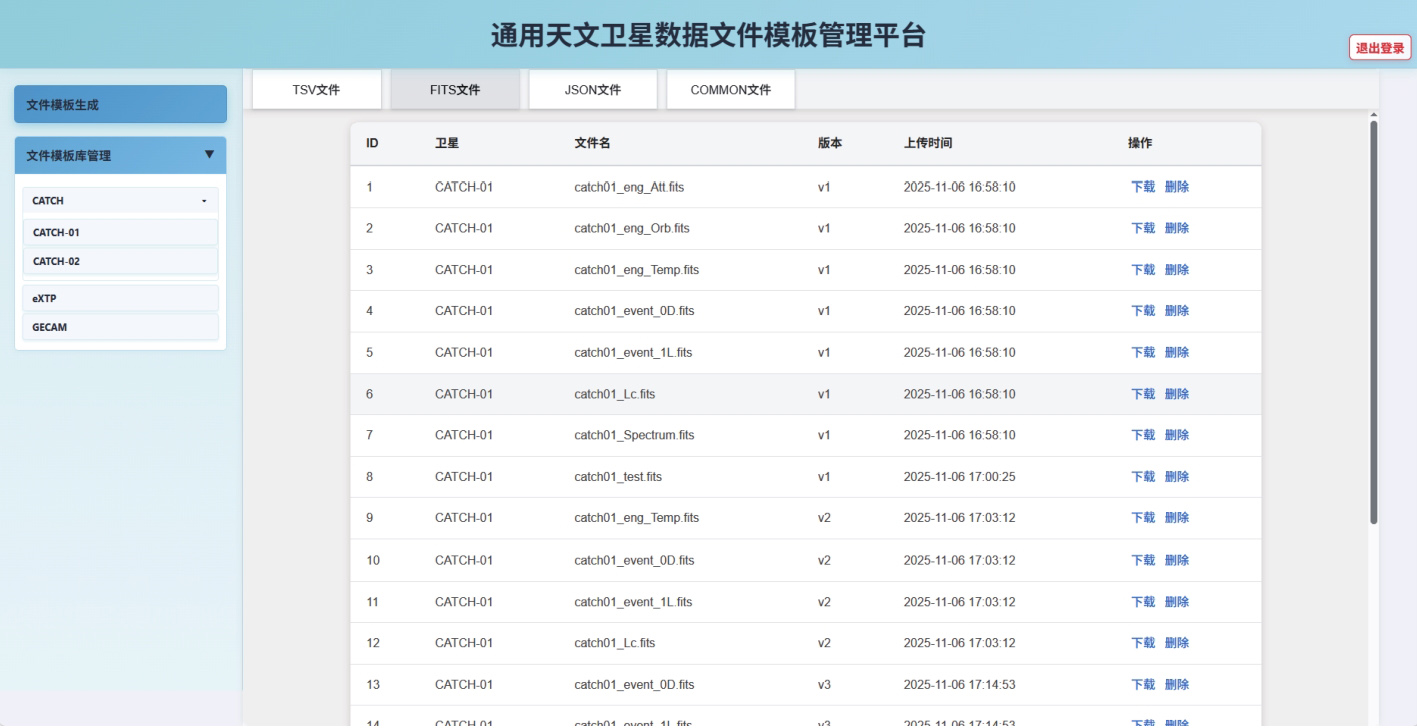
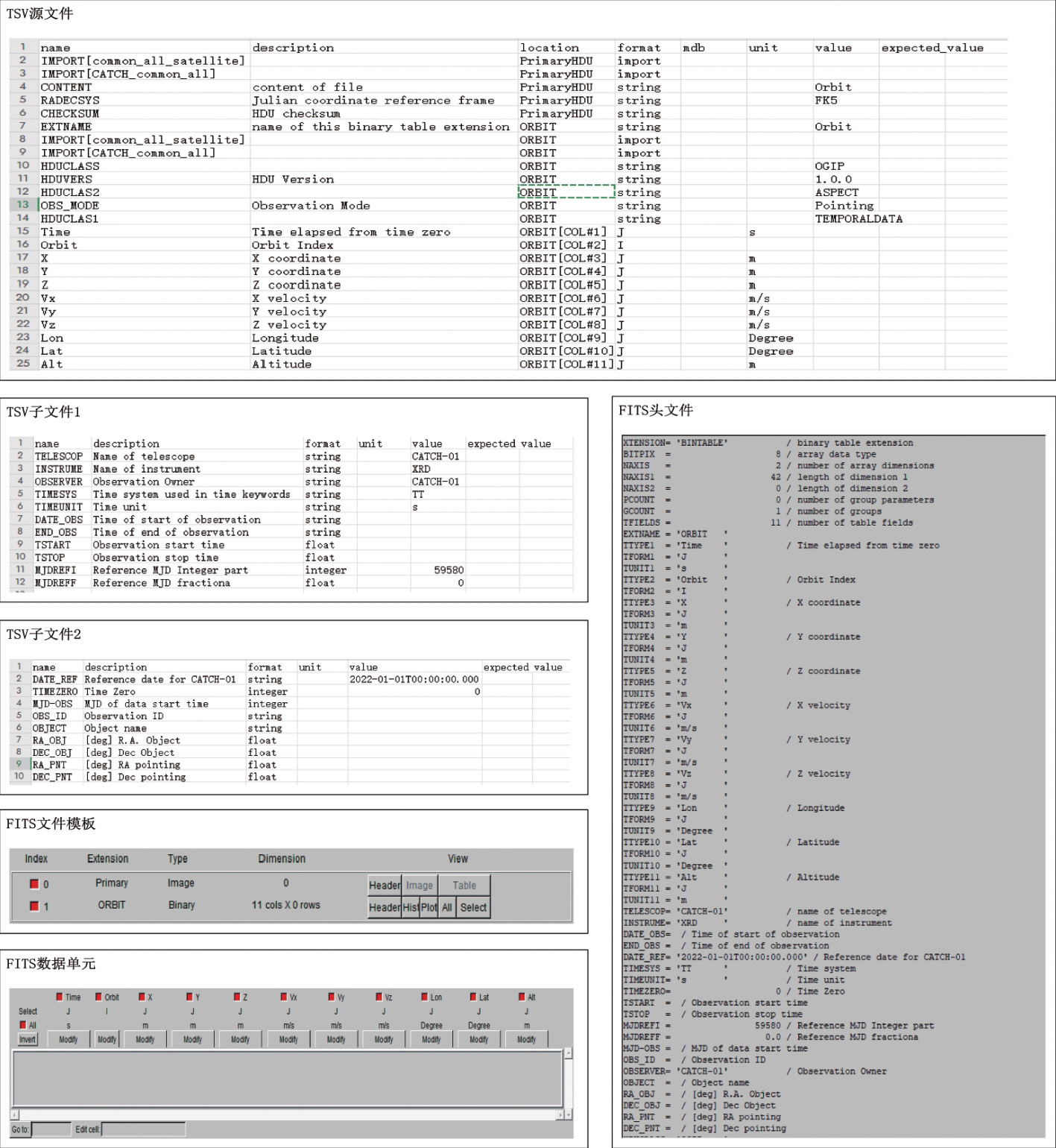
[Background] In astronomy, data file templates serve as standardized containers for satellite data products, ensuring data consistency and enhancing the capability of standardized data storage. The satellite data processing workflow involves reconstructing incident source information from observational data to generate energy spectra, light curves, and images, thereby enabling the inference of underlying physical processes. Each step in this pipeline is recorded and preserved using data file templates to maintain standardized data storage. The FITS (Flexible Image Transport System) format has become the standard for astronomical data exchange and storage due to its self-describing nature, flexibility, and compatibility. [Objective] To address the complexity and lack of generalizability in current astronomical satellite data file template generation methods, this paper designs and implements a universal platform for generating data file templates for astronomical satellites. [Methods] By investigating existing satellite data file template generation approaches, this study developes a visualization platform with a decoupled front-end and back-end architecture based on the Flask framework. Key functionalities include duplicate keyword extraction, automatic keyword classification, template generation, and file template library management, achieving full automation of the template generation workflow. [Results] The platform is tested on multiple satellites, including CATCH-01, eXTP, and GECAM, for keyword classification and data file template creation. Experimental results demonstrate the platform’s practicality and accuracy. [Conclusions] This study designs and constructs a data file template generation platform that provides standardized storage services for scientific users as part of the data processing pipeline, enhancing the standardization of the data product generation process for astronomical satellites.

Key words: data file template, astronomical satellite, FITS, data processing, standardization